A robot equipped with a human brain: are we opening Pandora’s box?
Contents8
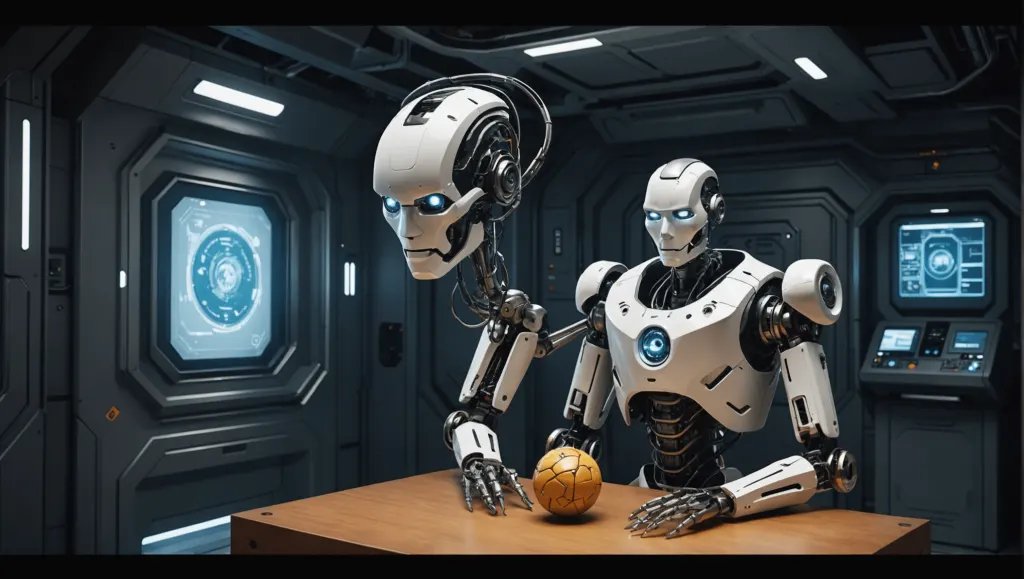
The fusion of artificial intelligence and the human brain raises profound ethical and existential questions. The advent of a robot with cognitive abilities equivalent to those of humans arouses both fascination and concern. Are we opening Pandora’s box by allowing the birth of an entity with powers beyond our control?
Biocomputing: Alliance of Bio and Digital
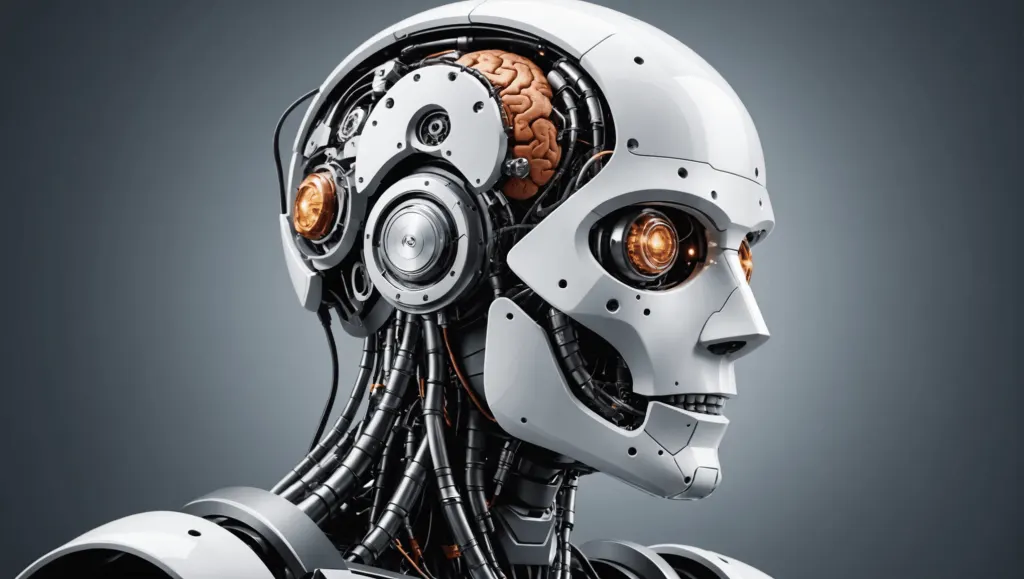
The integration of human brain cells in biocomputing chips opens a new era in the world of technology. These systems, which use electrical signals to interact with electronic devices, mark a major turning point. Indeed, the similarities between neurons and electronic circuits offer unimaginable opportunities, even if they come with their own challenges.
The First Promising Applications
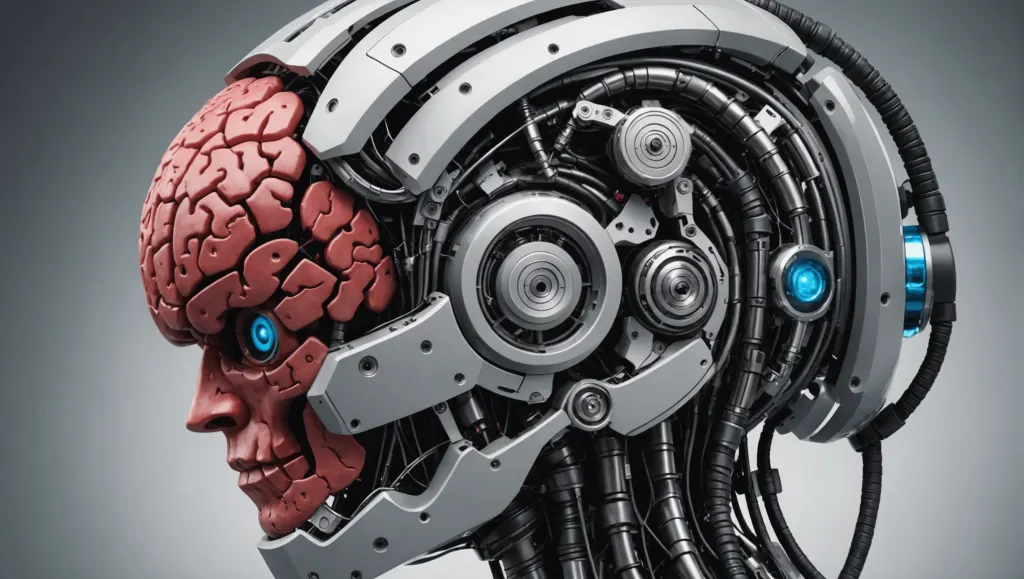
Advances such as DishBrain project from Monash University have revealed immense possibilities. With hundreds of thousands of human brain cells placed in simulated environments, these biocomputers demonstrate a rapid learning ability and energy efficiency which even surpass current artificial intelligence technologies.
The MetaBOC Project
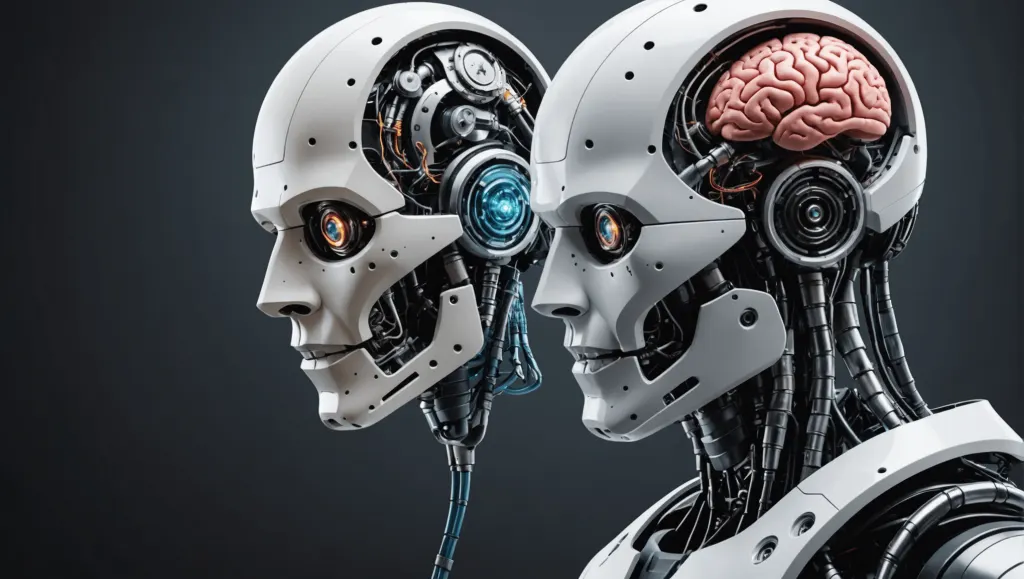
More recently, Chinese researchers launched MetaBOC, an open source software linking biocomputers to electronic devices. With this innovation, a human brain organoid can now control humanoid robots using electrical signals to learn and master different tasks, such as avoiding obstacles or grabbing objects.
Challenges and Limitations
If the potential is immense, there are nevertheless notable obstacles. Keeping cells alive, the need to feed them, water them and protect them from germs remain major challenges. Indeed, until now, biocomputers have not managed to remain operational for more than 12 months.
Ethical and Philosophical Implications
The potential to equip robots with brain based on human structure also raises profound ethical questions. If a robot can develop consciousness and learn in advanced ways, how should we reconsider our own definition of intelligence and life?
Comparison of Advantages and Disadvantages
Future Possibilities and Realities
- Technological Advances: potentialize a wide range of robotic applications.
- Ethical Challenges: navigate the moral and social implications.
- Medical Applications: potential developments in surgical intervention.
- Regulations: need for strict and ethical regulation.
- Economic Impact: possible upheavals in many industries.
FAQs
What is biocomputing? Biocomputing is a technology that uses biological cells, such as neurons, to create computers that operate on electrical signals.
What are the advantages of biocomputers? Biocomputers can learn quickly, consume less energy, and demonstrate superior intuition and creativity.
What are the current limitations? The main challenges include the need to keep biological cells alive, with intensive care requirements, and a limited lifespan of only 12 months.
What practical applications are envisaged? Biocomputers could be used to control robots, improving their ability to interact with complex environments and accomplish a variety of tasks.
What are the ethical risks? Ethical questions primarily concern the potential for consciousness in robots, the manipulation of biological life, and the moral implications of such technologies.
How could this technology evolve? By overcoming current limitations, biocomputers could revolutionize several industrial and medical sectors, while raising debates on the coexistence of man and machine.
Notez cet article
Read next
 AI news
A robot equipped with artificial intelligence scans your body to give you the perfect massage
Imagine for a moment that relaxation is no longer a luxury, but a reality accessible at any time. A sophisticated…
 AI news
Karavela: The revolutionary startup that designs a fundamental model of the human brain using artificial intelligence
Karavela is an innovative startup working to create a fundamental model of the human brain by leveraging advances in .…
 AI news
Chinese scientists unveil artificial intelligence inspired by the human brain that outperforms traditional systems
Faced with the energy and hardware limitations of traditional models, Chinese researchers have developed a new system…
 AI news
China presents a revolutionary artificial intelligence, 100 times faster than ChatGPT, inspired by the functioning of the human brain.
China has just unveiled a breakthrough that could revolutionize the landscape. With the launch of SpikingBrain 1.0, a…