A Surprising Experience: How One Woman Switched Her Therapist to ChatGPT and Experienced Rapid Recovery from Depression

Imagine a world where a simple chatbot could compete with psychologists to treat mental illnesses. This is precisely what a courageous woman experienced, who, faced with stubborn depression, decided to replace your therapist by ChatGPT. In the space of a few weeks, she noticed a radical transformation in her condition, destabilizing the certainties around human interactions and the mental health. So, is it possible that a artificial intelligence can offer emotional support beyond that of a health professional?

In an increasingly digital society, some people dare to take the unexpected step. This is the case of a woman who, tired of traditional therapeutic appointments, decided to abandon her psychologist for a chatbot: ChatGPT. In less than a month, she claims to have experienced a rapid healing of his depression, thus raising many questions about the impact of artificial intelligence on mental health.
The trigger for transformation
After going through a phase of depression persistent for almost a year, she felt stuck. Psychotherapy sessions became repetitive, and no significant progress seemed on the horizon. It was then, in a moment of despair and curiosity, that she decided to test the tool developed by OpenAI, ChatGPT. This bold choice allowed him to open up to another form of support without the traditional judgment of human therapists.
Dialogue with artificial intelligence
When she started interacting with ChatGPT, she was surprised by the reactivity and the ability of the chatbot to process its feelings with a insight unexpected. Contrary to what she might have feared, ChatGPT wasn’t just throwing back random phrases; he engaged in in-depth discussions around his concerns, responding in ways that sometimes seemed more appropriate than that of a psychologist. Like many others, she began using it as a confidant, sharing intimate thoughts and emotions without fear of being judged.
The impressive results
After a few weeks of daily interactions, she noticed significant changes in her emotional state. What had seemed insurmountable during her previous sessions became clearer, and avenues for reflection that she had never considered emerged thanks to her discussions with ChatGPT. THE studies suggest that this type of tool can be effective in the diagnosis and treatment of depression, which seems to be true here. For her, these virtual conversations generated a positive dynamic which led to a rapid healing.
The debate on artificial intelligence in therapy
However, this choice is not without controversy. In the medical community, many are wondering about the implications of replacing human contact with artificial intelligence. Could psychologists be replaced by ChatGPT and other chatbots? While some consider that such a tool can facilitate the management of emotions, others fear that it will devalue the work of therapists and minimize the importance of the human journey in healing.
A new hope or just a trend?
Beyond ethical debates, this woman’s experience should not be considered as a simple passing phenomenon. It represents an illustration of how theAI can influence our relationship to mental health. Young people, like this 27-year-old executive assistant from Washington, are increasingly adopting these tools, raising questions about the future of technology. psychology and therapeutic methods. These changes in care methods call for reflection on how best to integrate artificial intelligence into a framework that remains above all human.
As we continue to explore the limits of what ChatGPT and other artificial intelligences can accomplish, it is essential to ask whether this rapid healing is representative of a new reality or simply a highlighting of individual needs often neglected in the traditional therapeutic framework.
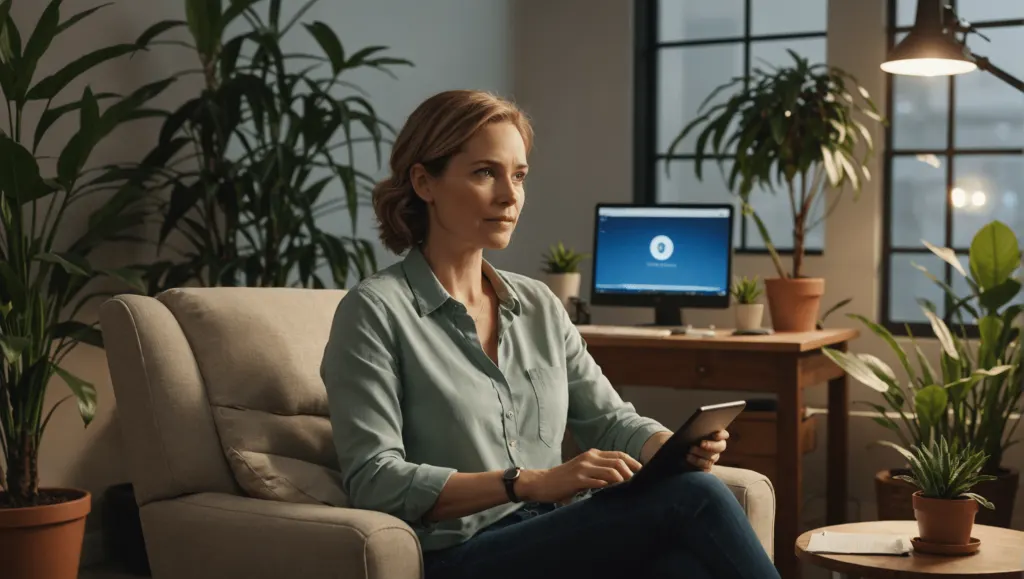
Comparison between ChatGPT and Traditional Therapy
Notez cet article
Read next
 AI news
Do AIs experience fear of mortality? Surprising results raise intriguing questions.
The question of whether can experience a form of « fear » in the face of its extinction takes on an intriguing…
 AI news
Immerse yourself in the world of my AI clone: a humorous, surprising and decidedly unique experience!
Dive into the world of my AI clone and get ready to experience humorous , surprising and resolutely unique ! Imagine a…
 AI news
Grok stuck on its own platform: a surprising response from AI
The situation seems surreal: Grok, Elon Musk's famous chatbot, has found itselfblocked on its own platform, X. This turn
A controversial rapid transformation turns ChatGPT into an extremist: researchers are outraged.
In a world where is becoming increasingly integrated into our daily lives, a recent study has revealed that simple…