AI culture: Opponents of artificial intelligence, a new echo of the Luddites?
Contents7
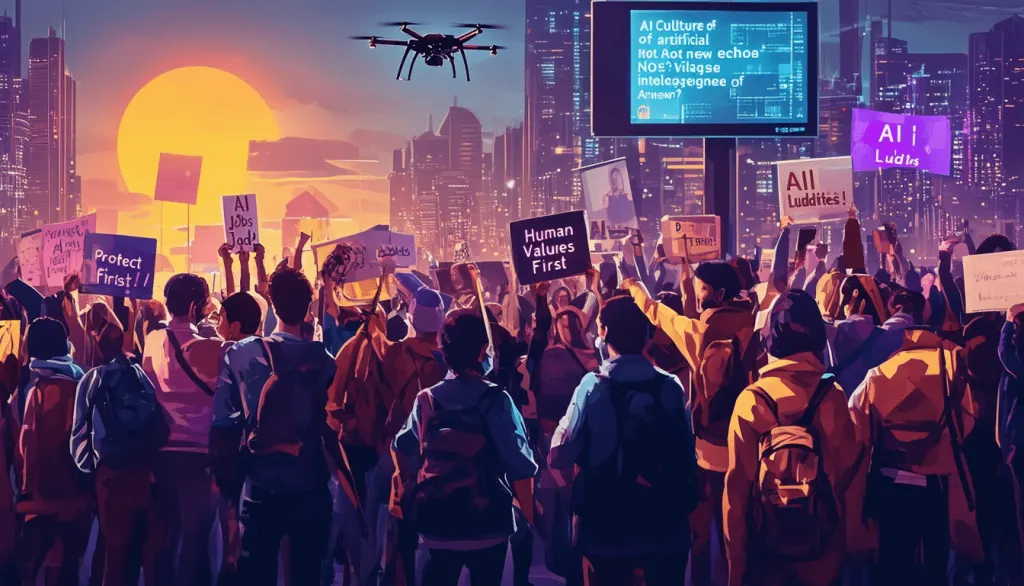
This Tuesday, September 24, the neo-Luddit movements demonstrated their growing opposition against artificial intelligence and new technologies. These activists, often driven by concerns about mass surveillance, there loss of jobs, and theunpredictability of algorithms, recall the protests of the Luddites of the 19th century. Back then, these weavers sabotaged the machines that threatened their livelihood. Today, the confrontation with AI reactivates these same historical dynamics, raising crucial questions about the future of humanity in the face of technologization.
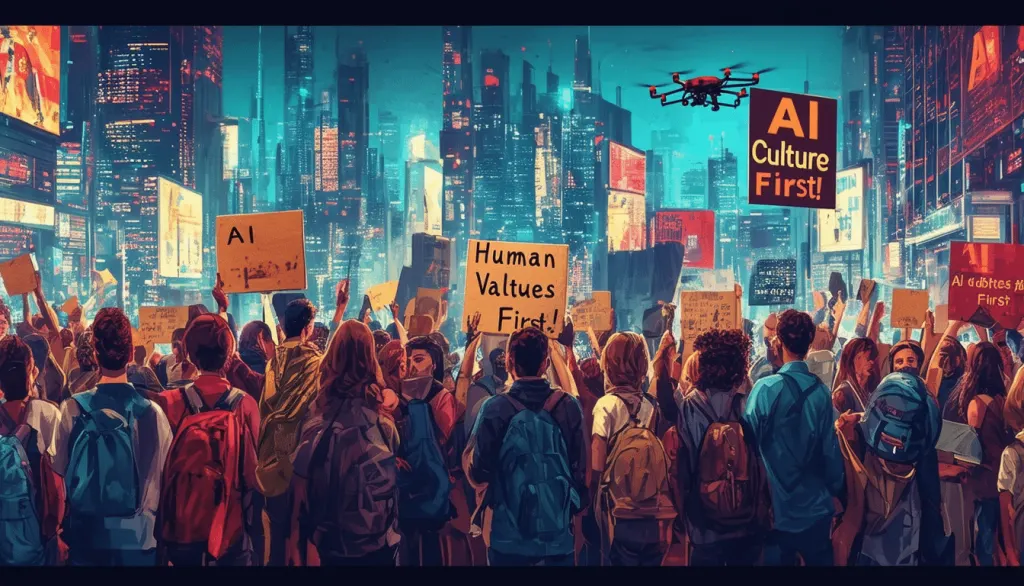
Neoluddite movements stand against the rapid evolution of artificial intelligence (AI) and new technologies. Far from a simple technophobic nostalgia, their concerns range from mass surveillance to the loss of jobs, through the unpredictability of algorithms. This feeling of revolt recalls the resistance of the Luddites of the early 19th century who opposed the mechanization of the textile industries.
Origins and motivations of the neoluddites
The term « Luddite » originated in early 19th-century England, where skilled workers, known as Luddites, attacked machines that threatened their jobs. Ned Ludd, a semi-legendary figure, is often associated with these sabotage actions. Today, the neoluddites, although less radical, express vigorous opposition to AI and advanced technologies.
Fear of mass surveillance
One of the major concerns of modern neo-Luddites is theestablishment of mass surveillance. The growing use of algorithms in security, surveillance and marketing is fueling these fears. Facial recognition technologies and data collection systems pose significant ethical and privacy questions.
Job loss and automation
The rise of AI and robotization repetitive and routine tasks continue to eliminate jobs. Unlike industrial mechanization which eliminated blue-collar positions, AI now targets more skilled positions. The fear of an increase in technological unemployment is omnipresent among opponents of current technological developments.
Unpredictability of algorithms
AI algorithms, often seen as black boxes, generate considerable distrust. The unpredictability of their decisions and their opaque behavior reinforce users’ feeling of loss of control. This situation inflames concerns about fairness, accountability and transparency of AI-based technologies.
The resurgence of anti-AI movements in the current context
Today’s neo-Luddite movements are fueled by contemporary social and economic challenges. Rapid advancements in artificial intelligence and its application in various sectors are generating notable resistance globally. The story of the Luddites highlights that revolts against industrial transformations are not new, but take a new form in the face of current challenges of AI technology.
Cultural and sociopolitical influence
North American concerns about AI contrast with cultural perceptions in Japan, where the adoption of robots and AI is more widespread and better accepted. This cultural difference highlights the diversity of reactions to technological advances and the importance of sociocultural contexts in the acceptance of new technologies.
The future of AI technology
The question remains open as to whether history will vindicate the concerns of today’s neo-Luddites. Should we fear the consequences of the increasing automation of tasks, or see it as an opportunity for progress and freedom from professional constraints? The debates are numerous and complex, and the future of AI is still to be written.

Notez cet article
Read next
Jailbreak ChatGPT 2026 : Exploration de DAN v13+, Echo Chamber et Storytelling – Une méthode toujours efficace ?
Dans le paysage évolutif de , le jailbreak ChatGPT 2026 constitue un sujet de fascination brûlante qui attise les…
 AI news
Deepfake videos threaten the credibility of A69 opponents thanks to advances in artificial intelligence
Recent advances in now make it possible to create doctored videos, known as deepfakes, that pose serious risks to the…
 AI news
Podcast: AI Culture: Is the era of autonomous aircraft approaching?
The debate over the integration of in aviation and the possibility of autonomous aircraft has never been more pressing.…
 AI news
Mark Zuckerberg reveals himself: behind the scenes of the culture of leaks at Meta
With a transparency at half mast and leaks become commonplace , Mark Zuckerberg decided to dissect the culture of leaks…