Artificial General Intelligence: The Catalyst for an Economic Revolution

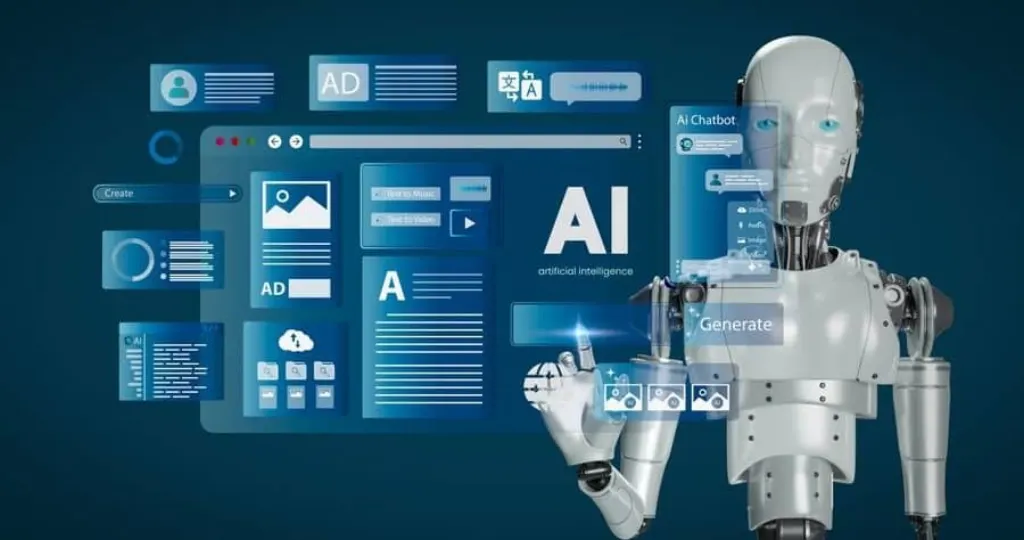
ArtificialGeneral Intelligence (AGI) is poised to be a game-changer as a major catalyst for an economic revolution . By transcending human capabilities in planning, problem-solving, and decision-making, AGI promises to fundamentally reshape economic dynamics. This disruption could transform productivity and business models on a global scale. With applications ranging from optimizing industrial processesto creating new services**, the potential impact of this technology is immeasurable. However, it also raises ethical concerns and governance issues that require careful and concerted consideration.** « `html **Artificial General Intelligence (AGI) promises to significantly transform our economic world. By evolving into a new technological phase, AGI could become the main driver of a digital, economic, and industrial revolution, comparable to previous revolutions that have shaped our history. This article explores recent advances, challenges, economic stakes, and emerging opportunities related to AGI.**Artificial General Intelligence: A Dream in the Making
AI has already made enormous progress with systems like GPT-4, which show flashes of artificial general intelligence. However, we are still far from the true cognitive autonomy that we have been hoping for. AGI represents a model that can plan, understand abstract concepts, and solve complex problems with near-human competence. This requires a major technological breakthrough that could still take years, if not decades, to reach exploitable maturity at scale.
Potential Contributions of AGI to the Global Economy
AGI has massive potential to drive economic growth. Experts anticipate significant productivity increases in sectors such as healthcare, finance, and retail. By making informed decisions and automating processes faster, AGI could contribute significantly to increasing global gross domestic product. Estimates predict an impact in the trillions of dollars by 2030, solidifying AGI’s role as a key enabler of the next industrial era.
Impact on markets and jobs
The integration of AGI into current economic systems will radically transform financial markets. With analytical capabilities surpassing those of humans, AGI will introduce a new level of economic efficiency, but will also raise concerns on the jobs front. Many occupations, especially those based on repetitive tasks, could be at risk, requiring a rethink of employment and skills training policies.
Technical and Ethical Challenges of AGI
The development of AGI is not without challenges. On the technical side, it will be necessary to solve complex problems related to creativity, adaptability and learning under conditions of uncertainty. On the ethical side, crucial questions arise, in particular on governance, the responsibility for decisions made by autonomous machines, and the security of systems. The future of AGI will depend heavily on how these issues are addressed.
AGI: a unique global opportunity
For countries like France and those on the African continent, AGI represents a once-in-a-century opportunity. In Africa, for example, AI is already a catalyst for development, particularly in the areas of health and agriculture. Seizing this opportunity could breathe new life into emerging economies and help reduce global inequalities.
Conclusion: A turning point
Although artificial intelligence is often seen as a driver for maintaining the status quo, AGI is forcing us to radically rethink our economic approach. The potential for a real revolution, both economic and social, is immense. To take full advantage of this technology, we must adopt a proactive approach by anticipating its effects and guiding its developments in an ethical and inclusive manner.
Notez cet article
Read next
 AI news
The emergence of general AI: a disruption ten times more intense and rapid than the industrial revolution, warns the head of DeepMind
(AGI) is poised to transform our world at an unprecedented pace and scale, estimated to be ten times more significant…
 AI news
Vladimir Atlani, economic expert, anticipates massive adoption of artificial intelligence in the professional environment: ‘Let’s prepare for this technological revolution
Vladimir Atlani, recognized for his expertise in economics and , highlights the importance of anticipating the…
 AI news
Artificial intelligence: promise of an economic revolution or just a speculative bubble?
is currently at the center of numerous debates, oscillating between promise of an economic revolution and the fear of…
What if artificial general intelligence already existed, but was still beyond our control?
The emergence of (AGI), capable of equaling human intelligence, remains a subject of passionate debate among…