show index hide index
- Advances in virtual reality
- Hardware advances
- Software advances
- Advances in social experiments
- The possibilities offered by virtual reality
- A world of parallel realities
- A new training tool
- A world of medical discoveries
- A new way to explore the world
- Parallel life experiences thanks to virtual reality
- Explore fantasy worlds
- Simulate professions and skills
- Live historical and cultural experiences
- The limits of virtual reality in creating a parallel life
- 1. Technical limits:
- 2. Social boundaries:
- 3. Psychological limits:
Advances in virtual reality
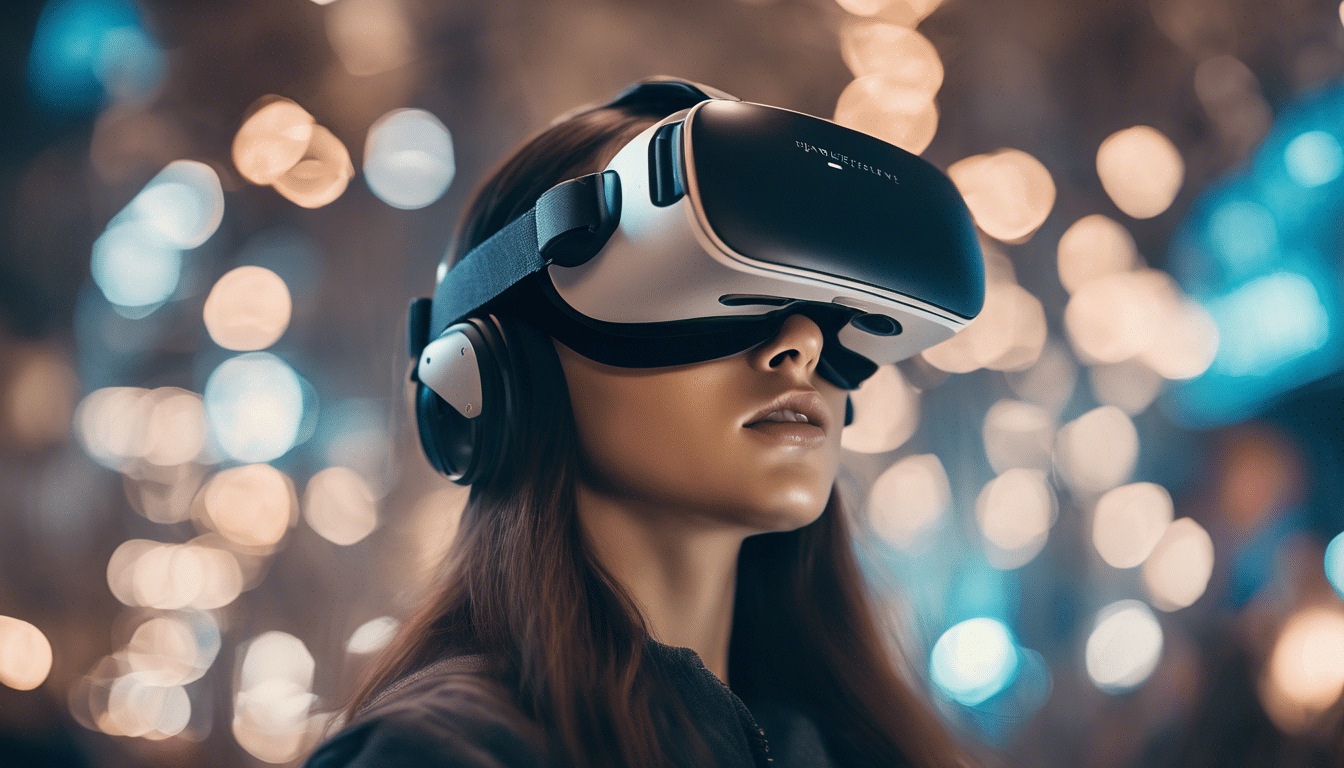
Virtual reality (VR) is an evolving technology that has seen significant advances in recent years. Progress has been made in both hardware and applications, opening up new perspectives for this immersive technology. In this article, we will explore some of the most important advances in virtual reality.
Hardware advances
Technological advancements in the hardware field have greatly contributed to improving the VR experience. Virtual reality headsets have become more comfortable to wear, lighter and more ergonomic. They also incorporate high-resolution screens that offer better image quality and reduce the grid effect, which significantly improves immersion.
Another major advancement concerns motion controllers. With these devices, users can interact with a virtual environment using their hands or special controllers. This allows for a more immersive experience by simulating real movements in the virtual world.
Finally, the tracking sensors have also been improved. They track the user’s movements with great precision, making interactions in VR more fluid and natural. These hardware advancements have significantly increased the realism and accessibility of VR.
Software advances
Software advancements have also played a crucial role in the development of VR. Developers have been creating increasingly immersive apps and games, taking full advantage of the capabilities of VR hardware.
A major advancement in entertainment is the arrival of high-quality virtual reality games. VR gaming experiences provide total immersion, allowing players to experience thrilling virtual adventures. Many popular titles have been adapted for VR, and new games designed specifically for the technology are continually emerging.
Virtual reality isn’t just limited to gaming. It is also used in fields such as vocational training, medicine and architecture. For example, some surgeons have trained on VR simulators before performing real operations, enabling risk-free virtual practice. Likewise, architects can create virtual models of buildings to visualize and modify their projects before their physical realization.
Advances in social experiments
Another major advance in VR concerns social experiences. Thanks to virtual reality, it is now possible to interact with people from all over the world in a shared virtual environment. Whether playing online multiplayer games, participating in virtual meetings with work colleagues, or even attending virtual reality events, VR makes it possible to transcend geographic boundaries and interact in a more immersive way with people. others.
Advances in virtual reality are not only technical, they also have an impact on society. VR is becoming a powerful tool for education, entertainment, communication and many other fields. With continued improvements in hardware, software, and social experiences, it’s clear that virtual reality has a bright future and will continue to grow in the years to come.
The possibilities offered by virtual reality

A world of parallel realities
Virtual reality (VR) offers users the ability to immerse themselves in immersive virtual worlds. Whether playing video games, exploring virtual environments, or even socializing with other users, VR opens up a world of unprecedented possibilities.
With devices such as virtual reality headsets, users can temporarily disconnect from reality and immerse themselves in more engaging experiences. Virtual reality video games allow players to fully immerse themselves in virtual environments, providing realistic sensations and greater interactivity. Flight simulators, for example, give users the feeling of piloting an airplane, with realistic controls and breathtaking scenery. The use of VR in the entertainment industry opens up new possibilities for content creators and provides users with more immersive and engaging experiences than ever before.
A new training tool
VR also offers exciting possibilities in the field of training. Virtual reality simulators are used to train airplane pilots, surgeons and even firefighters. These simulations provide a safe environment to practice specific skills and gain experience before putting them into practice in the real world. Using VR, learners can familiarize themselves with complex procedures, experience different situations and make decisions in real time, all without any physical risk.
Additionally, VR can be used to recreate historical events, allowing users to relive key moments in history with an unprecedented level of detail and immersion. Museums and cultural institutions can use VR to offer virtual tours of archaeological sites, famous monuments or historical periods, providing an interactive and information-rich educational experience.
To read TruthScan vs. Undetectable AI: Can it outperform AI humanizers?
A world of medical discoveries
Virtual reality is also used in the medical field to help patients rehabilitate after injuries or accidents. Rehabilitation exercises can be carried out with the help of virtual reality devices, making sessions more engaging for patients and allowing accurate monitoring of their progress.
VR is also used in pain management, distracting patients from their symptoms and giving them a way to relax and entertain themselves during medical treatments. Studies have shown the benefits of virtual reality in reducing pain and anxiety in patients, providing a non-drug alternative to relieve symptoms.
A new way to explore the world
Finally, virtual reality offers a unique opportunity to explore places around the world without having to leave home. Virtual tours allow users to walk through cities, museums, national parks and even the seabed, providing an immersive and educational experience. Additionally, virtual reality applications can be used for training travelers, allowing them to familiarize themselves with new destinations before even setting foot there.
In conclusion, virtual reality opens up a world of endless possibilities. Whether for entertainment, training, medical or exploration, VR offers an immersive experience that goes beyond the limits of physical reality. With constant technological advancements, it’s exciting to imagine the new ways that virtual reality will shape our daily lives in the years to come.
Parallel life experiences thanks to virtual reality

Virtual reality (VR) offers a multitude of possibilities for creating parallel life experiences. By immersing users in immersive virtual environments, it offers the opportunity to enjoy experiences that would otherwise be inaccessible or impossible in the real world. From exploring fantasy worlds to simulating everyday tasks, VR allows users to discover and experience a parallel life in completely new and exciting ways.
Explore fantasy worlds
VR allows users to escape into fantasy worlds and explore exotic landscapes. Whether immersing themselves in a virtual reality video game or using simulation apps, users can discover visually stunning worlds and experience adventures they could never have imagined in real life. They may find themselves on top of a snow-capped mountain, on the ocean floor among corals, or even in space, walking on the Moon. VR offers a true escape from reality and allows users to live experiences that are completely out of the ordinary.
Simulate professions and skills
VR also offers the ability to simulate specific professions and skills, allowing users to live a parallel life by putting themselves in the shoes of a professional or expert in a particular field. For example, virtual reality applications can be used to simulate everyday tasks such as cooking, carpentry, or even piloting an airplane. Users can thus learn new skills and live realistic experiences without risk. This opens up new learning opportunities and allows users to project themselves into roles and careers they may never have considered before.
Live historical and cultural experiences
VR also allows you to relive historical events and discover different cultures in an immersive way. Thanks to virtual reality, users can find themselves in the middle of a medieval battle, attend a legendary concert or visit disappeared historical monuments. They can also experience cultural customs and traditions from around the world without leaving their living room. VR offers a unique opportunity to experience historical and cultural experiences in an authentic way, allowing users to connect to the past and other cultures in a more immersive way than ever before.
Virtual reality opens new doors for parallel life experiences. Whether exploring fantasy worlds, simulating professions or reliving historical events, VR offers endless possibilities for escape and learning. As technology continues to advance, we are only beginning to explore the potential of virtual reality to create even more engaging and enriching parallel life experiences.
The limits of virtual reality in creating a parallel life

Virtual reality is a growing technology that allows users to immerse themselves in an immersive digital world. It offers the possibility of creating stunning virtual experiences, visiting exotic places or experiencing incredible adventures. Some virtual reality enthusiasts even go so far as to claim that it can create a real parallel life. But what is it really? What are the limits of virtual reality in creating a parallel life?
1. Technical limits:
Although virtual reality has made tremendous progress in recent years, it remains limited by the current capabilities of the technology. Virtual reality headsets are still relatively bulky and uncomfortable, which limits the time one can spend wearing them. Additionally, the resolution and graphics quality of virtual images can sometimes be unsatisfactory, making the experience less realistic.
In addition, interactions with the virtual world remain limited. Although it is possible to move and interact with virtual objects, these interactions are often limited to simple gestures. Therefore, it is difficult to create a parallel life where one can perform all the actions and interactions that one can do in real life.
2. Social boundaries:
Virtual reality is a solitary experience. Although one can interact with other users online, it is difficult to recreate the richness of social interactions that one can find in real life. For example, it is difficult to recreate the subtleties of facial expressions, gestures or body language in a virtual environment.
Additionally, virtual reality can lead to social isolation. If we immerse ourselves in a virtual world for too long, we can neglect our relationships with others in real life, which can have detrimental consequences on our well-being.
3. Psychological limits:
Virtual reality may be immersive, but it remains an artificial experience. It can be difficult for our brains to distinguish between the virtual world and the real world. This confusion can lead to psychological problems such as spatial disorientation, motion sickness, or even hallucinations.
Additionally, virtual reality cannot fully replicate the physical sensations one can experience in real life. For example, the heat of the sun on our skin, the texture of an object or the taste of food cannot be realistically recreated in the virtual world. This limits our ability to create an authentic and immersive parallel life.
Although virtual reality offers many exciting possibilities, it also presents limitations in creating a parallel life. The technical, social and psychological limitations of virtual reality can hinder our ability to recreate a complete and authentic life experience. However, as technology continues to advance, some of these limitations may be overcome. For now, it is important to recognize the limitations of virtual reality and use it responsibly to make the most of its benefits without neglecting our real lives.
