Discover the professions most at risk from the advent of artificial intelligence
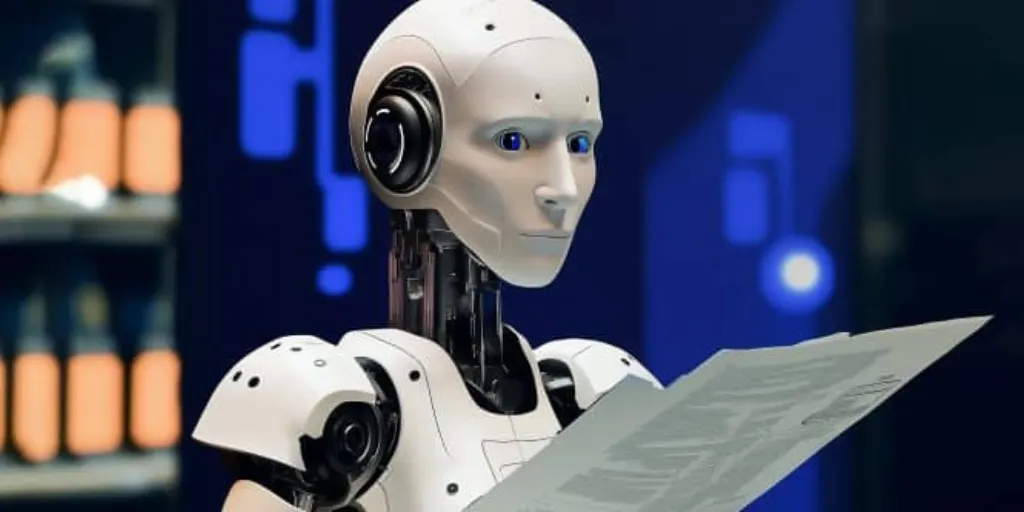
The advent of artificial intelligence is already revolutionizing many sectors, raising questions about the future of certain professions. As tools like ChatGPT and other advanced technologies become more efficient, several professions are finding themselves in the hot seat, exposed to widespread replacement by automated systems. Let’s discover which professions are most at risk and how this technological revolution could transform the employment landscape in the years to come. The meteoric rise of artificial intelligence raises new questions about the future of work. While some professions appear to be benefiting from this technological revolution, others are threatened with extinction. This article explores the professions most at risk from AI, drawing on recent analyses and expert opinions. Computer Programmer Computer programmers may be among the first to feel the effects of AI. With tools like ChatGPT capable of generating code, identifying errors, and even transforming ideas into programming languages, this profession is in danger. While intelligence remains an assistant for the moment, the future could see the automation of certain tasks, rendering this work obsolete.Journalism Journalism professions are also on the front lines. Thanks to technological advances, AI tools can write articles, analyze data, and generate content more efficiently than many human journalists. Media giants are already beginning to experiment with these new technologies, raising concerns about the sustainability of the profession. Paralegal In the legal field, legal assistants are in AI’s crosshairs. Their primary role is to process and analyze large amounts of information. Since these tasks can be automated by AI systems, the paralegal and legal assistant professions could find themselves in precarious situations in the near future. Market Analyst Market analysts are also threatened. Their role, which requires collecting data and identifying trends, can be efficiently performed by AI systems capable of manipulating and interpreting large amounts of information in record time. Thus, the need for humans in this field could significantly diminish. Teacher Teachers fear that their role will be diminished by AI. With systems capable of delivering lessons, marking assignments, and even assessing students, the idea of completely replacing teachers with machines no longer seems utopian. Although human interaction is irreplaceable, it is difficult to predict how far these technologies can evolve. Trader In the financial markets, traders are also at risk. AI can automate routine tasks, such as creating trading algorithms, making many entry-level positions redundant. Consequently, the trading field could see a drastic transformation with the implementation of these technologies.
Graphic DesignerThe world of graphic design is not left out, as AI tools such as DALL-E or MidJourney allow the generation of works of art from simple text. This phenomenon could lead to a reconfiguration of the industry and jeopardize traditional artistic professions, as inexpensive talent proliferates on the market. Secretary
Finally, secretarial jobs are facing automation. Writing emails, managing calendars, and other administrative tasks can be efficiently handled by ChatGPT or similar systems. Secretaries in more basic roles are therefore under direct threat from AI, faced with more efficient and faster tools.
Accountant The accounting profession is often perceived as secure, but the evolution of AI technologies is challenging this certainty. Repetitive tasks such as tax returns or account management can be automated, threatening the future of this profession, which previously seemed safe. Customer Service Agent Customer service agents are already seeing their roles transform with the integration of AI-powered chatbots. These tools are capable of handling large volumes of requests, providing 24/7 support while reducing costs for businesses. This observation heralds an uncertain future for this profession, which new technologies could replace. In conclusion, the future of professions as AI evolves appears uncertain. While some job categories are currently under threat, others could emerge in the process. Given this reality, a reassessment of skills and a commitment to lifelong learning are essential to adapt to this changing world.
Notez cet article
Read next
 AI news
The 40 professions at risk from the rise of artificial intelligence
raises many questions about its impact on the world of work. According to a study by Microsoft researchers, forty…
 AI news
Artificial intelligence pioneer Geoffrey Hinton warns of the risk of AI escaping from human control
Geoffrey Hinton, a leading figure in artificial neural networks and a pioneer in , expresses his concerns about the…
 AI news
The most impressive creations from Internet users thanks to ChatGPT’s new AI!
Hello to all creativity and technology enthusiasts! The revolution is underway with the latest version of ChatGPT,…
 AI news
Discover the professions threatened by AI according to Microsoft: is your job affected?
The burning question in today’s workplace is: Which jobs will be replaced by AI? Microsoft recently unveiled an…