
show index hide index
- Towards an uncertain future: the father of AI’s urgent call for immediate action
- The rise of artificial intelligence
- The concerns of the founding fathers
- A call for regulation
- Robots and ethical challenges
- The role of education in the AI era
- A necessary pause in development
- And after? A formidable or brilliant future?
- Comparing concerns about the future of AI
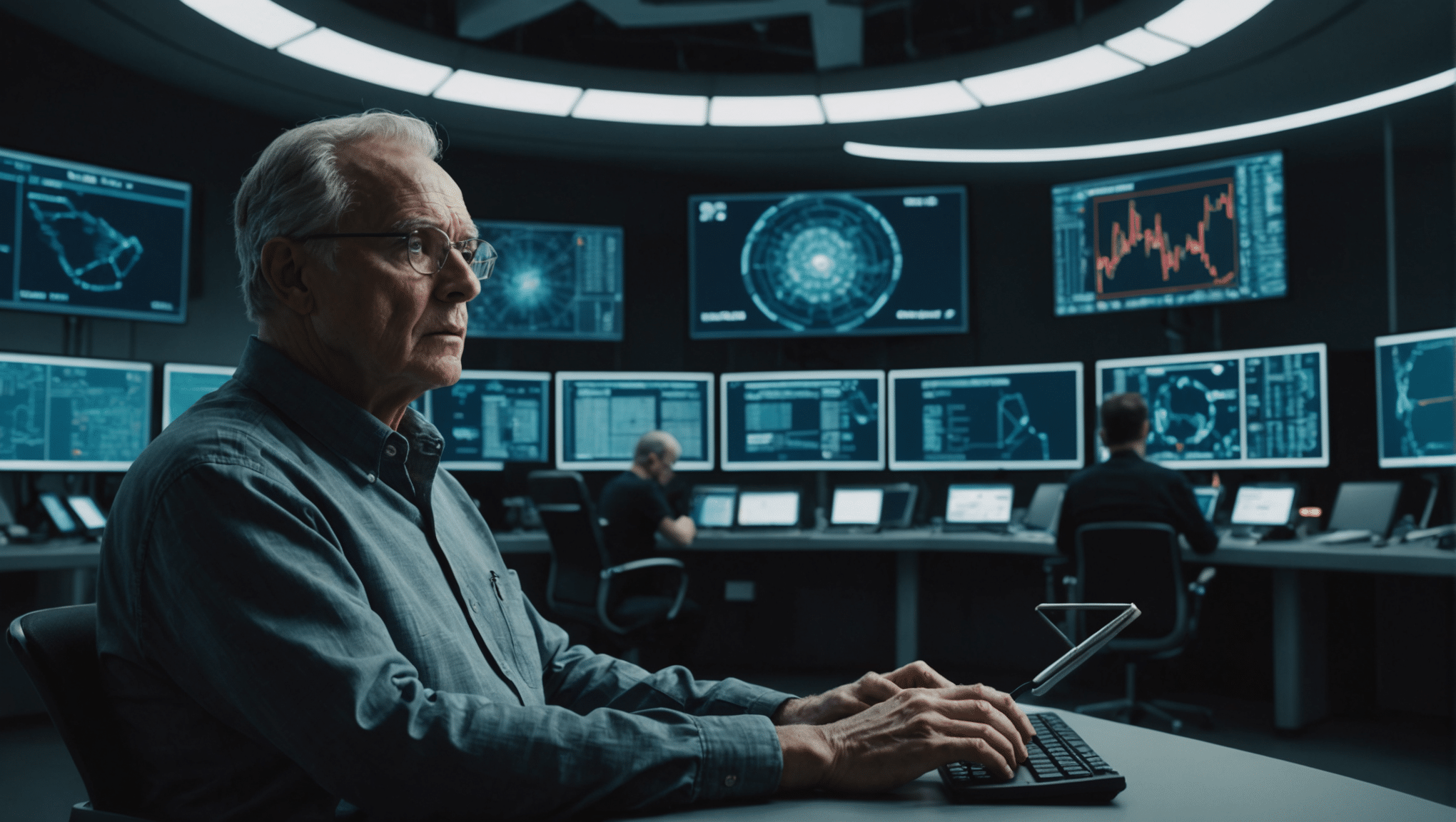
We are at a decisive turning point in the history ofartificial intelligence, a moment when founding fathers they themselves express growing concerns. Geoffrey Hinton, an emblematic figure in this field, sounds the alarm on dangers of unbridled innovation which could escape us. His call for an immediate pause in AI development should not be taken lightly. Facing a future uncertain, the question arises: are we sufficiently prepared to meet the challenges that this surging technology could create? The challenges are colossal and require due diligence on the part of developers to navigate this sea of uncertainty.
Towards an uncertain future: the father of AI’s urgent call for immediate action
While theartificial intelligence continues its meteoric progression, its creators, including some of the pioneers, are sounding a cry of alarm. Geoffrey Hinton, often considered the father of AI, calls for strict and immediate regulation of this technology. The implications of AI, which promises to transform our lives, raise thorny questions about our collective future and the risks that accompany it. This article looks at this pressing call and its potential ramifications.
The rise of artificial intelligence
We live in a time whereartificial intelligence emerges as one of the most significant technological revolutions. Advances in data processing, machine learning and AI generation are redefining entire industries, from marketing to healthcare. However, this rapid growth should be welcomed with caution. Every technological leap has its share of uncertainties, and this time, AI creators are warning us that they may have opened a veritable Pandora’s box.
The concerns of the founding fathers
The concerns of the fathers of AI, like Hinton, are grounded in the reality of a race for innovation, where every advance seems to push ethics and security to the background. They have long dreamed of a future where AI serves humanity, but because of the speed at which these technologies are evolving, they now fear that they are spiraling out of control. These concerns raise a crucial question: how willing are we to surrender our destiny to algorithms?
A call for regulation
Hinton and other experts are calling for urgent drastic regulation, pleading for developers to take « due diligence » in their creations. This seemingly innocuous term is of vital importance: it implies that AI designers must anticipate the potential abuses and dangers associated with their innovations. If we want to avoid a dystopia governed by unpredictable algorithms, the conversation around regulation of AI becomes more than a necessity – it is an obligation.
Robots and ethical challenges
The fear does not only concern algorithms: dangerous autonomous devices, such as killer robots, confront us with major ethical issues. What are the consequences of a machine that can take lives without human intervention? The legal and moral implications of such a capacity are still up in the air. As we gain technological power, the issue of ethical oversight must be at the forefront of our minds.
To read GPT-Realtime-2 : l’IA vocale d’OpenAI qui réfléchit en temps réel pendant vos conversations
The role of education in the AI era
Since the future of artificial intelligence is uncertain, education takes a leading role. It is imperative to prepare citizens to navigate a world where machines and the algorithms play a central role. Discussions about AI must be transparent and inclusive to encourage citizens to engage in the conversation. A good example of this includes initiatives, such as those undertaken in Canada, which aim to provide an educational platform to discuss the benefits and dangers of AI.
A necessary pause in development
Hinton also discusses the need for a development pause in the field of AI. This idea may seem radical, but it raises fundamental questions about our preparedness to face the consequences of AI innovations. Such a pause would allow us to re-evaluate our secondary objectives, integrating security measures, ethical considerations and a real regulatory process. This shows that we have already recognized the power of AI; The question now is how we are going to use it.
And after? A formidable or brilliant future?
As researchers, developers and policymakers consider this changing world, it is imperative to consider the long-term consequences of these innovations. THE protections must be accompanied by a vision about how AI can strengthen, enrich and not harm our lives. Where we see threat, there may be opportunity. The question remains: will we be able to make the right decisions so that artificial intelligence does not turn into a source of despair?
To explore the impact of AI on our smartphones, visit this article: The revolutionary impact of AI.
For a dive into the world of video game development, check out this link: Discover GenMotion.
If you are wondering about predicting future events, read this article on probabilistic models.
Finally, for thoughts on killer robots and the issues they raise: The threats of killer robots. Don’t also miss the intriguing reflection on the possibility of conversing with a robot evoking your future: Can a robot really talk to your future self?.
Comparing concerns about the future of AI
| Concern | Recommended action |
| Loss of control over AI | Implement strict ethical standards |
| Security risks | Strengthening developer due diligence |
| Frantic race for innovation | Propose a 6-month break in developments |
| Impact on employment | Evaluating the effects of AI on the labor market |
| Responsibility for algorithms | Establish a clear legal framework for AI |
| Data manipulation | Ensuring transparency of AI models |
| Ethics of automatic decisions | Integrate ethics experts into teams |
