
show index hide index
The rapid evolution of artificial intelligence raises crucial questions: will AI replace humans in many areas? Discover the surprising answer to this fundamental question that is shaking up our modern societies!
Artificial intelligence and its promises
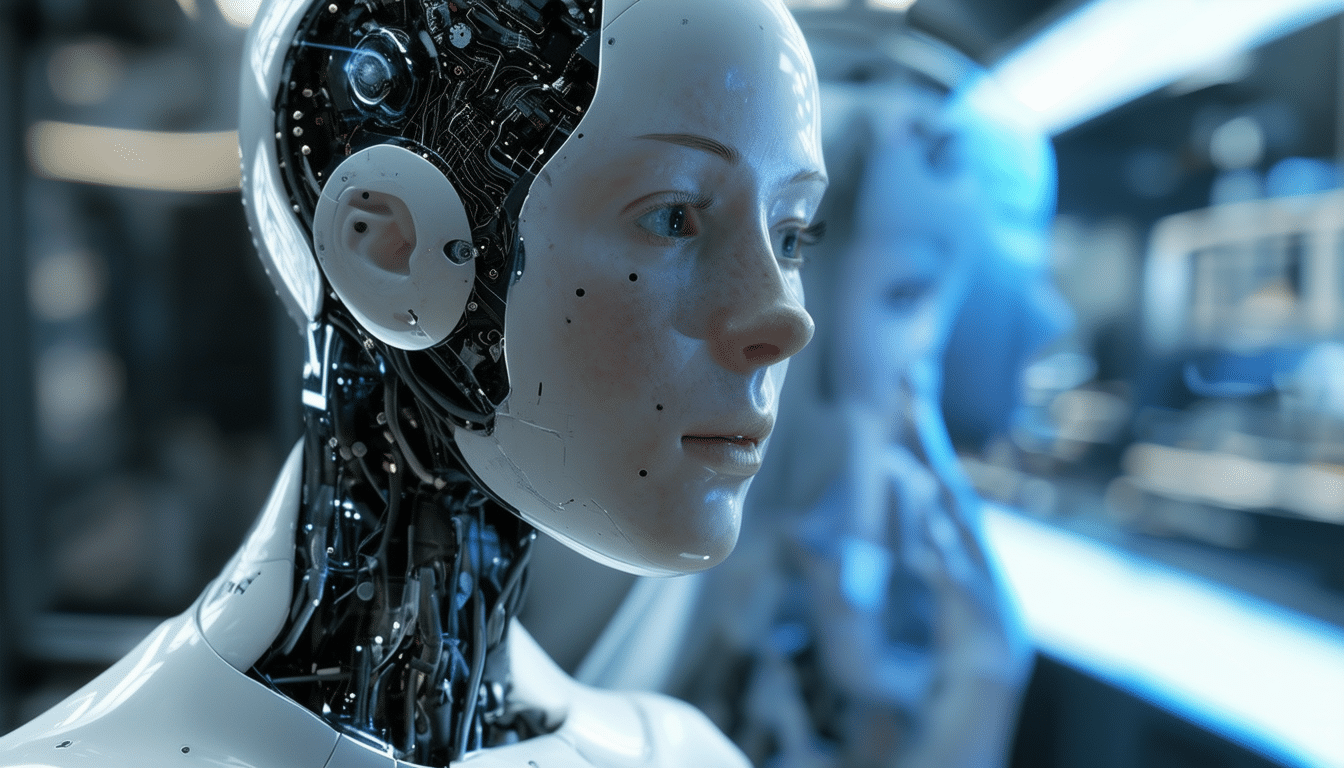
When we talk aboutartificial intelligence (AI), futuristic scenarios where machines replace humans in all tasks immediately come to mind. Whether it isidentify the best CV for a position, detect cancer cells invisible to the naked eye, or even predicting fraud, AI seems capable of anything. With their implacable logic, the algorithms promise us maximum optimization and, potentially, an error-free life.
Exaggerated expectations of AI

The history of AI, dating back to 1956, has gone through many cycles of “springs” and “winters”. The rise of technology deep learning (“deep learning”) has fueled considerable expectations. Nowadays, AI systems such as ChatGPT have captivated millions of users around the world, answering various questions with disconcerting ease. However, these successes often give rise to excessive expectations, followed by phases of disillusionment.
The polarities of public opinion

Faced with the rise of AI, two camps are opposed: the optimists, who see in these technologies an opportunity to revive economic growth and solve global problems like climate crisis, and the pessimists, who fear a “great technological replacement”. Discussions around AI are often polarized, simplifying complex issues into a binary debate.
Current realities and ethical issues
The reality is that the power given to AI is often overestimated. Many focus on futuristic utopian or dystopian scenarios, ignoring the current challenges posed by AI. These challenges include:
- THE algorithmic bias which can amplify inequalities.
- THE copyright issues linked to the generation of content by machines.
- The exploitation of underpaid workers to annotate the data necessary for training models.
- THE environmental cost related to the resources needed to operate these advanced systems.
Listen to experts to better understand
To address these challenges appropriately, it is crucial to listen to the perspectives of scientists, entrepreneurs, sociologists, philosophers And theologians who are already exploring these questions. This debate must go beyond a simple clash between optimism and pessimism to examine the real issues raised by artificial intelligence.
