
show index hide index
The world of technology continues to reinvent itself, and Raspberry Pi in collaboration with Sony hits hard with their brand new smart camera. Equipped with a sensor IMX500 revolutionary, this camera not only captures images, it analyzes and processes them thanks toartificial intelligence integrated. At $70, it presents itself as a solution accessible to all technology enthusiasts, promising to broaden the horizons of machine learning and computer vision. What innovative applications can emerge from this synergy between Raspberry Pi And Sony? The possibilities are as fascinating as they are new.

The collaboration between Raspberry Pi And Sony led to the creation of a camera intelligent which promises to open fascinating horizons for the use of artificial intelligence in many fields. The new camera module integrates the sensor IMX500 from Sony, enabling advanced image processing power directly on the device. With a range of 12 megapixels and a field of view of 76°, this camera is not just a gadget, but a real tool intended to transform our interaction with the digital world.
A revolutionary tool for developers
For the developers and the researchers, the Raspberry Pi AI Camera represents a wealth of opportunities. With its affordable price of $70, it becomes accessible even for DIY projects, allowing access to machine learning capabilities without requiring complex setup. Journey into the world of AI application development and explore how machine learning can be incorporated into innovative projects.
Applications in surveillance and security
The sphere of security is one of the areas where this camera literally shines. Thanks to its integrated AI processing, the camera can analyze video streams in real time, identifying suspicious behavior or even detecting intrusions. Imagine a scenario where a simple Raspberry Pi monitors your home, instantly alerting to any unusual activity. This advancement is transforming our homes into smarter, safer spaces.
Image recognition and data analysis
On-chip image processing capability opens doors for image recognition and thedata analysis. Using the IMX500 sensor, this camera can identify objects, faces, and even feelings. This allows AI solutions to be applied in various contexts, from market segmentation to biometrics to behavioral analytics in retail stores.
Educational apps
Teachers and educators can take advantage of this tool to introduce students to advanced concepts. The camera is an ideal device for school projects around robotics and artificial intelligence, allowing students to program solutions and experiment with image recognition and data processing. It’s an engaging way to encourage engagement with STEM.
Development of industrial solutions
In the industrial sector, the Raspberry Pi AI Camera can be used to monitor manufacturing processes, detect defects in products or improve logistics efficiency. By integrating AI into the production chain, such a camera can optimize performance and reduce waste. This gives new meaning to automation and efficiency, while undermining reliance on expensive systems.
A step towards a smart future
This camera, packed with advanced features, raises fascinating questions about technologies of tomorrow. With the rise of collective AI, it is crucial to ask how these innovations will reshape our daily lives. For a broader view on the subject, explore concepts such as collective AI and the incredible examples of AI in our lives by consulting these practical cases.
In short, the launch of the Raspberry Pi smart camera in partnership with Sony is a promising technological adventure. With applications ranging from home security to academic research, it proposes a fascinating future where AI becomes ubiquitously integrated into our daily lives. Don’t forget to also take an interest in artificial perception, essential for the understanding and evolution of intelligent systems.
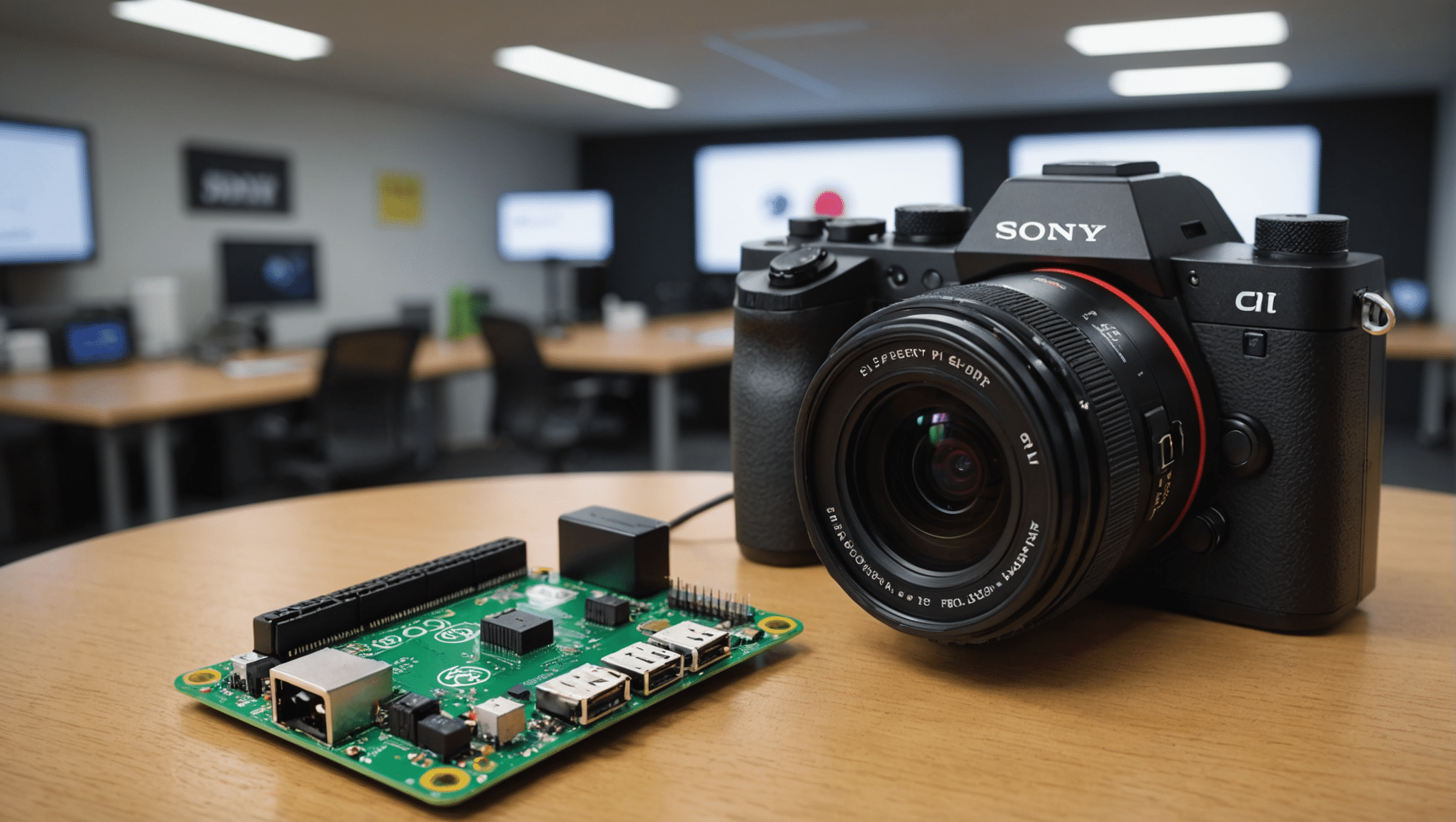
Raspberry Pi and Sony smart camera applications
| Applications | Description |
| Monitoring | Use for home security or surveillance of public spaces. |
| Data Analysis | Processing images to extract critical information, such as facial recognition. |
| Robotics | Integration into robots for autonomous navigation or obstacle detection. |
| Education | Educational tool for learning the basics of machine learning and computer science. |
| DIY projects | Ideal for makers looking to experiment with artificial intelligence. |
| Industrial analysis | Monitoring of manufacturing processes, improvement of productivity. |
| Medical | Applications in telemedicine for remote visual diagnosis. |
| Marketing | Analysis of consumer behavior via image recognition. |
