How artificial intelligence is revolutionizing agriculture to save the planet?
Contents5
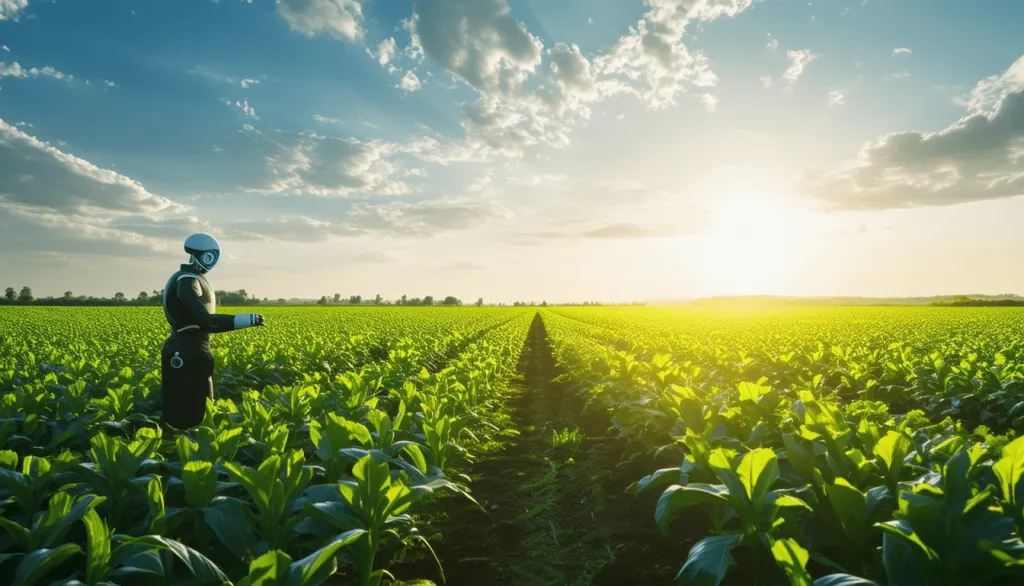
The rise of artificial intelligence represents a major advance in many fields, including agriculture. Thanks to its analysis and prediction capabilities, AI is revolutionizing agricultural practices by enabling more efficient management of resources and a reduction in environmental impact. This alliance between technology and agriculture offers innovative solutions to preserve the planet and ensure sustainable food production.
Introduction of artificial intelligence in agriculture
The introduction of theartificial intelligence (AI) in agriculture marks a real revolution, particularly in the face of the challenges posed by a growing world population, which could reach 10 billion people in the near future. Agricultural land and water resources are becoming scarce, making the need for agricultural techniques more sustainable And effective now essential. The Kaiserslautern-Landau University of Technology in Rhineland-Palatinate, via its experimentation center in Hofgut Neummülhe, is currently exploring these innovative technologies.
Crop optimization using AI
One of the main benefits of AI in agriculture is its ability to optimize crops. Using advanced sensor networks and algorithms, farmers can monitor crucial parameters like soil moisture, nutrient levels and weather conditions in real time. This not only optimizes the use of water and fertilizers, but also to predict yields and adapt cultivation techniques accordingly.
Reduction of waste and environmental impacts
By reducing the need for resources, AI helps minimize waste and the environmental impacts of agriculture. Using monitoring systems and predictive models, farms can reduce their ecological footprint. For example, agricultural machines equipped with AI can be programmed to apply pesticides with pinpoint precision, thereby minimizing pollution and environmental damage.
Improved productivity and profitability
AI technologies don’t just make agriculture more environmentally friendly. They also make it possible to improve the productivity and the profitability farms. Large-scale data analysis enables farmers to make informed decisions, thereby increasing operational efficiency and reducing costs. For example, autonomous harvesting robots operating via AI algorithms can work 24/7, without fatigue.
Challenges and perspectives
Although AI promises significant improvements, some challenges remain. L’accessibility The financial cost of these technologies remains a priority, especially for small farms. It is also crucial to train farmers in these new methods to ensure effective and sustainable adoption. Despite these obstacles, the evolution of AI in agriculture looks promising and necessary to meet future dietary needs worldwide.
The agritech revolution driven by artificial intelligence offers potential solutions to make agriculture more sustainable and efficient. Faced with a growing population and limited resources, optimization and reduction of environmental impacts become essential. AI, with its data analysis capacity and precision, promises to be one of the keys to meeting these major challenges. By investing in these technologies and properly training farmers, we can hope to build a sustainable future for our planet.
Notez cet article
Read next
 AI news
AI and climate: Can technology save the planet or will it finish it off?
In recent years, debates around and climate change have taken a prominent place in our society. Researchers and experts…
Intelligence artificielle et agriculture : quand le monde paysan invite à célébrer la sagesse de la lenteur
L’ révolutionne de nombreux secteurs, y compris l’ agriculture , en promettant efficacité et rapidité. Cependant, face…
Tunisie : la stratégie nationale d’intelligence artificielle au service de la santé, de l’agriculture et de la souveraineté numérique
La Tunisie se lance dans une stratégie nationale d’intelligence artificielle qui vise à transformer plusieurs secteurs…
 AI news
AI: A revolution that is transforming and consuming the planet
is revolutionizing our world at breakneck speed, bringing impressive innovations every moment. Behind amazing…