How could humanity evolve in 50,000 years? Discover the futuristic visions of AI in pictures!
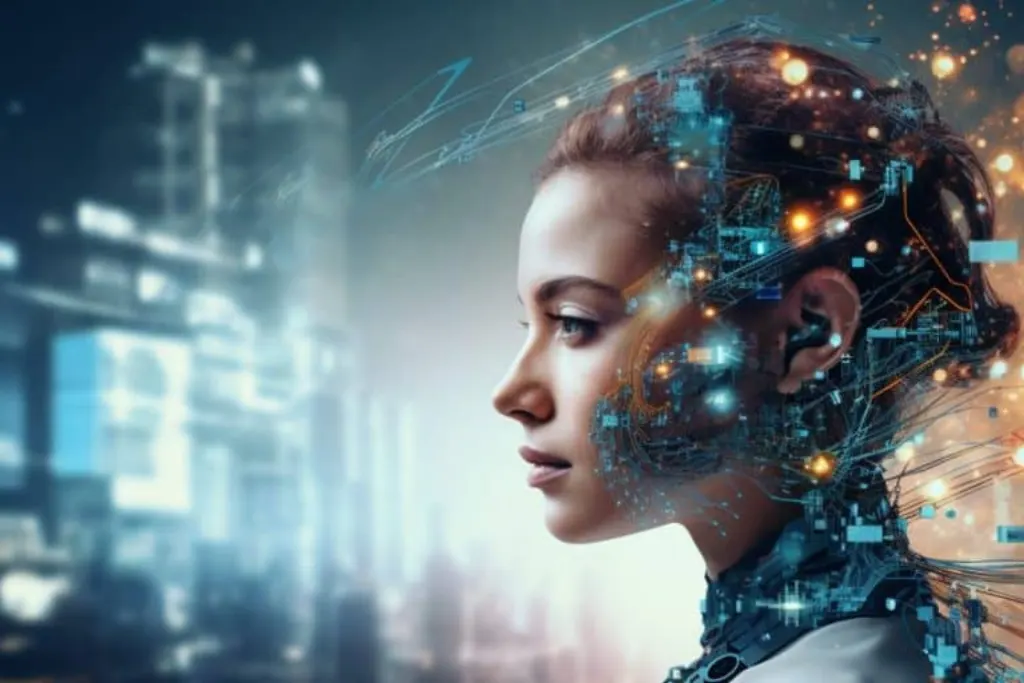
With the meteoric emergence of artificial intelligence technologies, speculation about the future of humanity is taking on an exciting dimension. Imagine a world where humans live in alien environments, shaped by thousands of years of adaptation. How could humanity transform its body and mind in the face of unprecedented challenges? Visionaries, drawing on the analytical and creative capabilities of AI, offer us striking glimpses of human evolution 50,000 years from now. Discover these futuristic visions, illustrated by fascinating images, which push us to think about our place in the universe.
What will our descendants look like in 50,000 years? The dazzling advances in AI offer us a fascinating window into this future, where humanity will have left Earth to explore other worlds – and this could have unexpected consequences for our evolution. Using tools like ChatGPT and other AI models, we can dive into a visual and intellectual exploration of our potential future, imagining how planetary isolation might shape our descendants. Let’s go and discover these incredible visions!
AI’s first thoughts on our future
With the development of artificial intelligence technologies, the possibilities of exploring the future of humanity no longer seem like science fiction. ChatGPT, for example, was challenged to think about what humanity might be like in the distant future, including looking at the evolution of those who might be born on planets like Mars or beyond. Imagine a future where humans born on Mars were different from those who remained on Earth. The AI anticipates that these humans could evolve into a new species, which we could call Homo martianus.
Glimpses of a Martian humanity
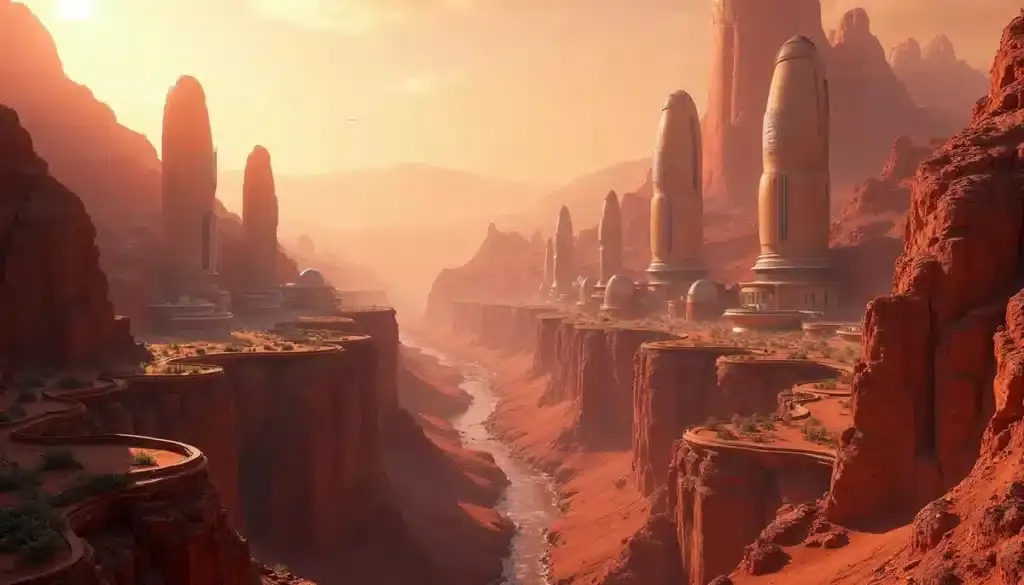
According to AI speculation, these Martians would have a taller stature, a more fragile bone structure, but a more advanced circulatory system, capable of better handling Martian conditions. Such a development raises the question: how will isolation and environment influence the course of life?
Portraits of humanity on other planets
By pushing our imagination even further, AI allows us to explore the possibility of humanity dispersed throughout the solar system, and even beyond. What would happen if we colonized planets like Venus, Pluto or the moons of gas giants such as Titan?
Homo-Venusian
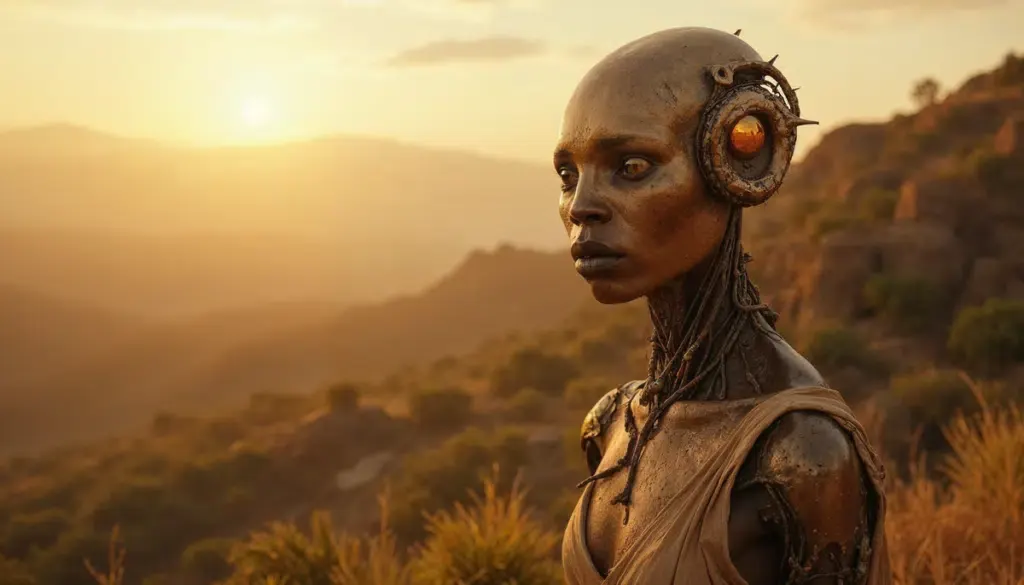
Imagine Homo-Venusian, a descendant of humans adapted to Terraformed Venus. It would have a slender body, capable of dissipating heat, with reflective skin that would allow it to protect itself from the blazing sun and developed vision to adapt to the short days of Venus. This portrait depicts the challenges of adapting to an extreme environment.
Homo-Plutonius
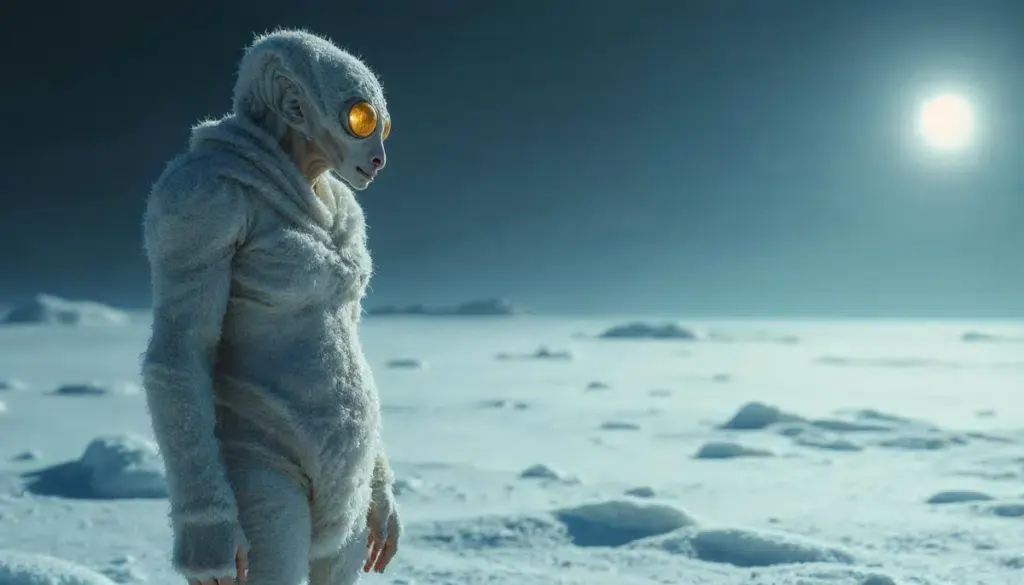
Then there’s Homo-Plutonius, a species that evolved on Pluto, where life involves coping with near-cryogenic temperatures. With a body shape adapted to survive in extreme cold, its skin is almost crystal clear, designed to withstand the harsh climate. Humanity has always conquered challenges, and this Homo-Plutonius would be a striking demonstration of this.
A future based on bioengineering
Far from being a view of a distant future, the AI tools that model these futures also highlight possible advances in bioengineering. What human modifications could be made to adapt to these new environments? From skin capable of handling extreme radiation to respiratory systems adapted to varied atmospheres, these portraits of a futuristic humanity intensify.
Homo-Titanus
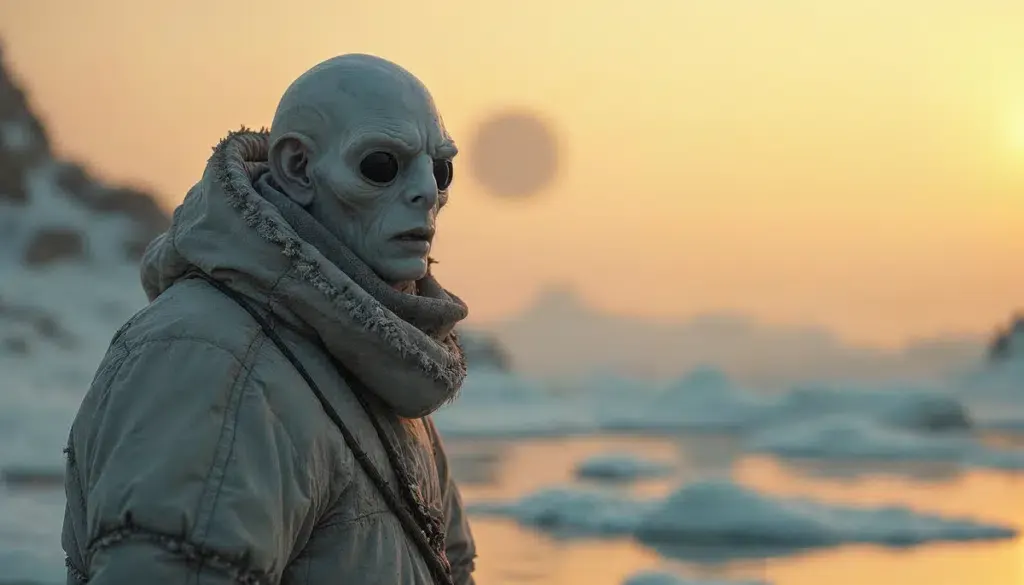
Homo-Titanus, for example, would be designed to survive on Titan, with thick skin to conserve heat. These adaptations suggest that in the long term, humans could become real superhero of evolution, capable of conquering worlds once deemed impossible to habituate.
Exploring human diversity across the solar system
Considering the expansion of humanity, AI also imagines various variations depending on the environment. This includes not only the examples already mentioned, but also humanoids descended from Ganymede or other celestial bodies, each having evolved according to the unique requirements of their new home.
Homo-Ganymedis
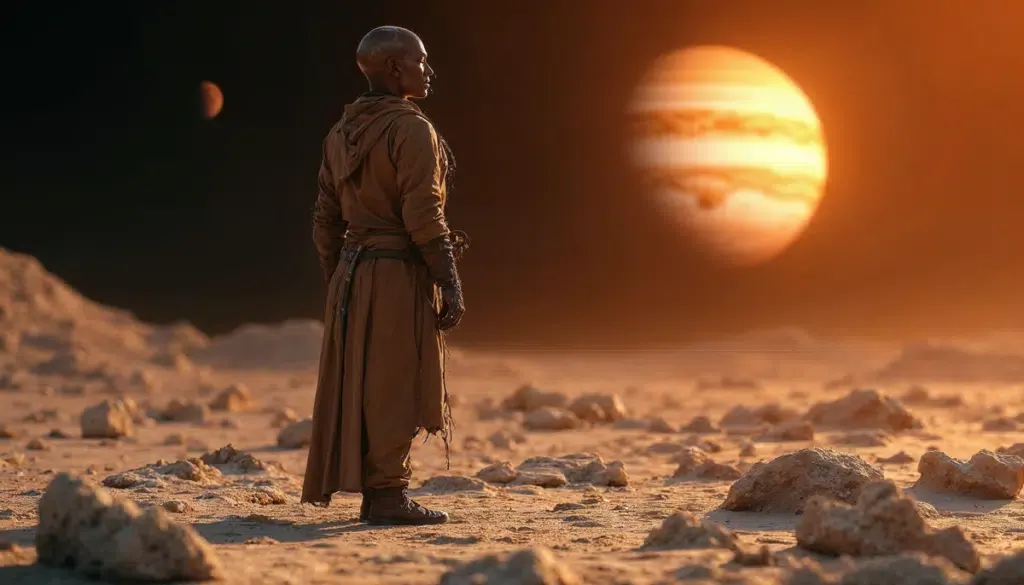
Let’s think of Homo-Ganymedis, evolving under the weak gravity of Ganymede. A compact physique, bronze skin resistant to radiation and eyes adapted to shady conditions; these are the traits of these new humans shaped by nature.
Homoproximus
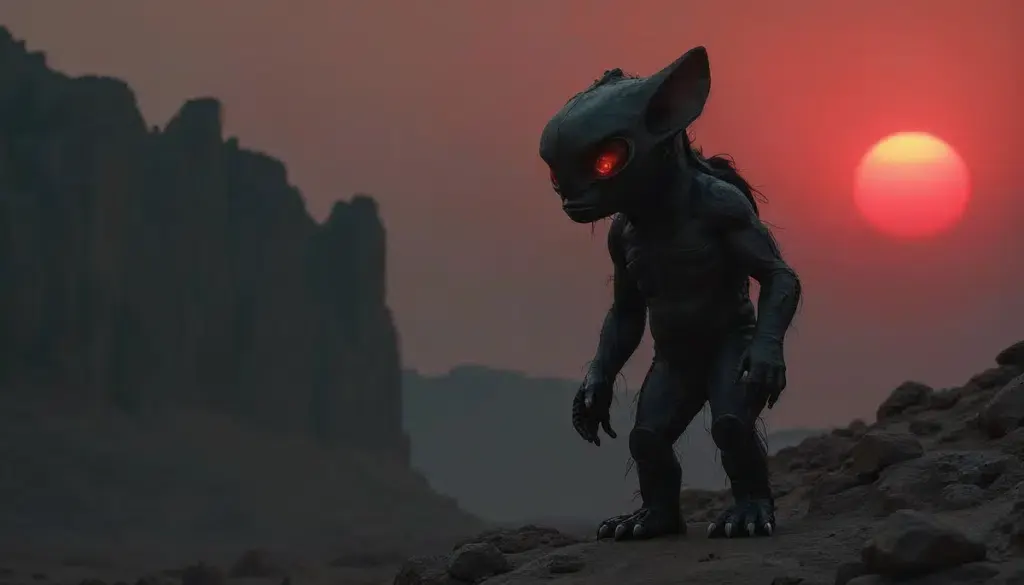
Finally, the Homo-proximus of Proxima Centauri, adapted to extreme extraterrestrial conditions, would represent the culmination of this adaptation process. Could they one day cross the paths of their earthly ancestors? AI invites us to think about these possible encounters between distinct species.
Through his futuristic visions, AI offers us an intriguing perspective on our future. It stimulates our imagination and pushes us to redefine our concept of humanity, daring to envision stories we never thought possible. These images, fueled by science and art, open the way to a new era of intellectual and creative exploration.
Notez cet article
Read next
 AI news
Artificial intelligence could cause a deep narcissistic wound to humanity
The democratization of is shaping up to be a significant development, not only for its technological applications, but…
 AI news
In a decade, artificial intelligence could surpass humanity by a factor of 10,000, according to one expert.
Imagine a world where no longer content to serve man, but surpasses him in all aspects of life, by a factor of 10,000 .…
 AI news
OpenAI reveals your visions for AI in 2025: discover the surprising number 4!
In a world where is evolving at lightning speed, user expectations play a crucial role in the direction this technology…
 AI news
Discover 10 worrying predictions about the future of AI and robotics by 2025: a threat to humanity?
In a constantly changing world, the and the robotics raise questions that are as fascinating as they are worrying. By…