How long is a rugby match?
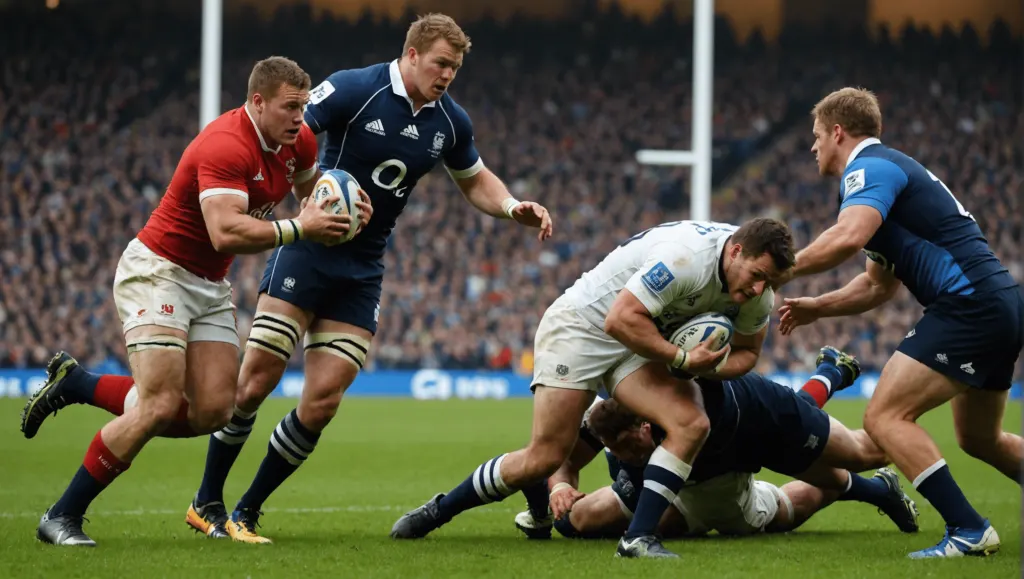
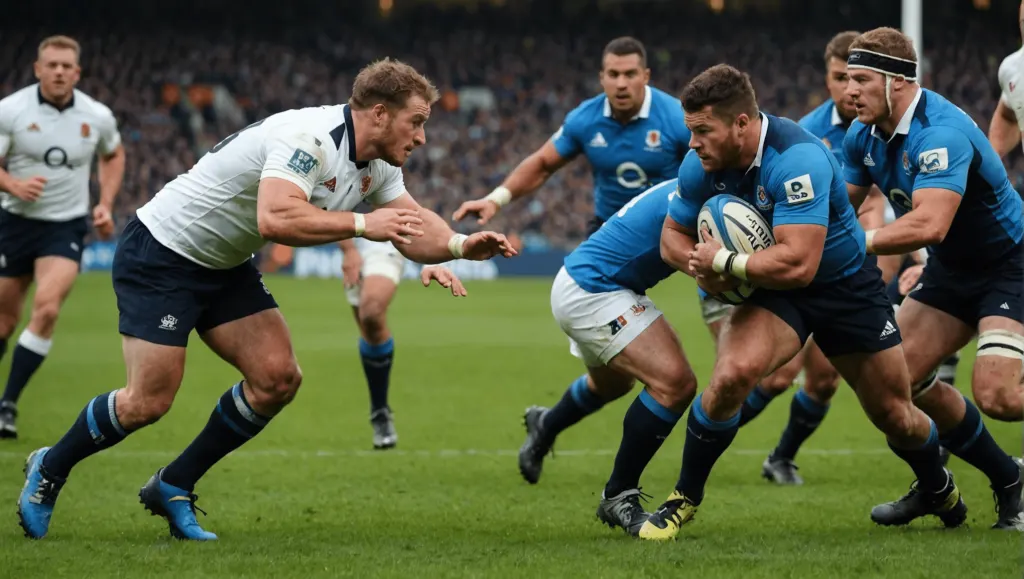
Time stops, adrenaline rises, tempers heat up… But in fact, how long does a rugby match really last? Let’s dive into the heart of the action to demystify the duration of this intense and exciting sport. Follow the guide to learn everything about measuring time on the oval field!
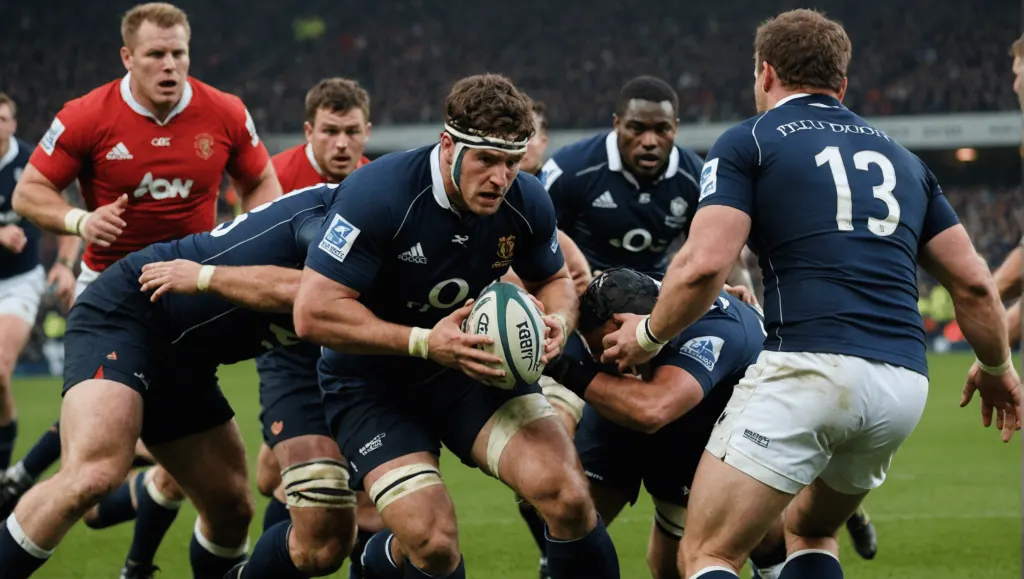
A rugby match consists of two halves of 40 minutes each. Between the two halves there is a break of 10 to 15 minutes. Thus, the total duration of a rugby match is 80 minutes. However, actual playing time may be less due to injury stoppages, throw-ins, penalties, tries, conversions, etc. In the event of a tie at the end of regulation time, extensions can be played, each lasting 10 minutes. For under-19 matches, halves are often reduced to 35 minutes each.
General rules

There duration of a rugby match is not always the same depending on the category of game. However, for professional matches and international competitions, it follows precise rules.
A rugby match is divided into two halves 40 minutes each. Between the two halves there is a break of 10 to 15 minutes, allowing players to rest and coaches to give instructions.
In summary, the total duration of a rugby match is 80 minutes, not counting stoppages in play due to injury or other interruptions.
It is important to note that the actual playing time may be less than these 80 minutes due to game interruptions for:
- Kickoffs and throw-ins
- The scrums
- The keys
- Penalties
- The tests
- The transformations
As for the extensions, they are rarely used during standard matches, but may be necessary in the event of a tie at the end of regulation time in the final stages of certain competitions. The extensions then consist of two additional periods of 10 minutes each.
When it comes to under-19 matches, the rules vary slightly. The two halves are generally reduced to 35 minutes each, for a total of 70 minutes of play, always with a half-time break.
Duration of a half
A rugby match is played in two periods, called half time. The total duration of a match is 80 minutes, or 40 minutes for each half.
Between the two halves, there is a break 10 to 15 minutes, allowing players to rest and receive instructions from their coaches.
The official rules are defined by World Rugby, the international regulatory body for rugby.
Each half in a rugby match lasts 40 minutes. The clock stops for stoppages in play such as injuries, substitutions or referee decisions, but time is usually added at the end of each period as added time Or stoppage of play.
In case ofequality at the end of regulation time, certain competitions may provide for extensions to determine a winner. Extensions generally consist of two additional periods of 10 minutes each.
Amateur rugby matches may follow slightly different rules, with shorter halves, often 30 or 35 minutes.
Additional time
A match of rugby generally takes place over a period of 80 minutes, divided into two halves of 40 minutes each. At the end of the first 40 minutes, players benefit from a break 10 to 15 minutes before resuming play for the second half.
Each of the two 40 minute periods is timed by the referee. It is important to note that time is actually arrested in the event of major interruptions, such as serious injuries or video consultations (VAR). This decision generally rests with the central referee, who can add time.
At the end of the second half, the referee may decide to add additional time to compensate for interrupted periods of play. This time is commonly called extension time Or stopping and varies depending on incidents occurring during the match.
It is important to note that if the match ends in a tie in certain competitions, extensions Additional competition may be provided to determine a winner. This scenario is particularly common in the final stages of major tournaments.
In short, the duration of a rugby match is mainly 80 minutes, but can vary depending on interruptions and competition requirements.
Player changes
There duration of a match rugby is a question that many people ask themselves. In general, a rugby match is divided into two halves of 40 minutes each, for a total regulatory duration of 80 minutes.
It is important to note that this duration includes stoppages in play for medical reasons, penalties, and even throw-ins. The effective playing time, that is to say the time during which the ball is in motion, is often shorter.
At the end of the first 40 minutes, a break of 10-15 minutes is observed. This allows players to recover and prepare for the second half. During this break, strategies can be adjusted depending on how the match is going.
Rugby teams have the option of making player changes during the game. Each team is allowed a certain number of substitutions, often up to 8 players. Changes can be made for different reasons:
- Tactical replacements
- Injuries
- Fatigue
The time used to make these changes is not deducted from the playing time. It is the referee who controls the clock and stops the game if necessary to allow substitutions.
🏉 Duration of a rugby match 🕒
Rules specific to certain competitions
A rugby match usually takes place in two halves of 40 minutes each. Between the two periods there is a break of 10 to 15 minutes, allowing players to rest and receive instructions from their coaches.
In the event of a tie at the end of regulation time, certain competitions may provide for extra time. The rules differ between tournaments, but overtime generally consists of two additional periods of 10 minutes each.
To better understand time management during a match, it is useful to know that the referee can stop the clock during certain interruptions such as:
- serious injuries,
- the scrums,
- the keys,
- penalties.
The match may also be extended beyond the regulation 80 minutes if action is in progress. The referee generally whistles the end of the match as soon as an action started before the end of 80 minutes ends.
In the Rugby World Cup, knockout matches (such as quarter-finals, semi-finals and finals) may require more complex methods to break a tie. If the score remains unchanged after extra time, it is possible to resort to:
- shots on goal,
- the rule of scored tries,
- other specific criteria defined by the competition organizer.
In the Six Nations tournament and domestic championships like the Top 14, there is generally no extra time in the event of a tie in the group stage. Sharing of points is then the rule. Final phase matches may follow special rules similar to those of the World Cup.
Duration of a World Cup match
A rugby match generally takes place in two halves of 40 minutes each, giving a total duration of 80 minutes of play. However, stoppages in play due to injuries or refereeing decisions may extend the effective duration on the clock. At the end of the 80 minutes, if the score is tied, some competitions provide for extra time to decide a winner.
Each rugby competition may have slightly different rules regarding match length. For example :
- Rugby matches at 7 are played in two halves of 7 minutes each.
- Competitions junior may have half-times reduced to 30 minutes depending on the age of the participants.
- In some amateur tournaments, teams may decide to play shorter halves depending on weather conditions or the number of matches to be played.
During the Rugby World Cup, match duration rules generally respect international standards. The matches take place in two halves of 40 minutes, with a break of 10 to 15 minutes between the two periods. If the teams are tied at the end of the match, overtime is played in two 10-minute periods. If the tie persists, a sudden death period may be used, where the first team to score wins the match.
In the event of a very long tie, a penalty shootout may also be considered to decide the winner, although this is extremely rare in rugby.
Duration of an annual tournament match
The duration of a match rugby varies depending on the types of competitions and age categories. Generally, a rugby union match consists of two halves of 40 minutes each, separated by a half of 10 minutes.
However, there are specific rules for certain competitions. For example, in rugby 7, the duration is shorter, generally two halves of 7 minutes with a break of 2 minutes between halves.
During certain tournaments such as Six Nations or the World Cup, the matches follow the same duration rules as a standard rugby union match, i.e. two halves of 40 minutes. However, if a match ends in a tie in the final stages, extensions may be necessary. In this case, two additional periods of 10 minutes are played, followed by penalties if the tie persists.
Younger age categories, such as under-18s or under-16s, often play slightly shorter matches, with halves of 30 to 35 minutes, depending on the specific rules of each competition.
- Rugby : 2 x 40 minutes with 10 minutes break
- Rugby 7s : 2 x 7 minutes with 2 minutes break
- Extensions : 2 x 10 minutes in final stages (if necessary)
For an annual tournament, like the Six Nations Tournament, each match aligns with the standard duration of 80 minutes. This information helps to understand how match lengths can vary depending on the type of rugby being played and the competition being played.
Duration of a national championship match
A rugby match lasts normally 80 minutes, divided into two halves of 40 minutes each. There is a 10 to 15 minute break between the two halves to allow players to rest and prepare for the second part of the game.
In certain competitions, specific rules may apply. For example, in rugby sevens, matches are much shorter, generally consisting of two 7-minute halves. In the event of a tie at the end of regulation time, overtime may be played to determine the winner.
In the national championships like the Top 14 in France or the Premiership in England, matches follow these basic 80-minute rules. However, in the case of final stages such as the playoffs, overtime may be added in the event of a tie to determine the winner.
Rules specific to certain competitions may also include variations on playing time or how overtime is handled. It is therefore important to know the regulations specific to each tournament.
Here are some points to remember:
- A standard match lasts 80 minutes.
- 10 to 15 minute break between halves.
- Rugby 7s matches generally last 14 minutes.
- Extensions possible in the event of a tie.
Comparison with other sports
A rugby match hard 80 minutes, divided into two halves 40 minutes each. Between the two periods, there is a half-time of 10 to 15 minutes, during which the players can rest and listen to the instructions of their coaches.
Unlike some other sports, play time in rugby is relatively fluid. The clock does not stop for events like hits or scrums. However, the referee may decide to add extra time, called added time or « stoppages of play », to compensate for interruptions.
Let’s compare with other sports:
- THE soccer : Duration 90 minutes, divided into two halves of 45 minutes.
- THE basketball : Duration of 48 minutes in the NBA with four 12-minute quarters, and 40 minutes in FIBA with four 10-minute quarters.
- THE handball : Duration of 60 minutes, divided into two halves of 30 minutes.
It is therefore interesting to note that each sport has its own match duration, but that the rugby is within a reasonable average compared to other popular disciplines.
Duration of a football match
A rugby match consists of two halves of 40 minutes each, separated by a 10-minute break. This means that the normal time for a match is 80 minutes. However, the actual time spent on the field may be longer due to stoppages in play, injuries, or consultations with referees.
When comparing this to other sports, we can see significant differences in match length.
A football match lasts 90 minutes, divided into two halves of 45 minutes each, with a 15-minute break in between. As in rugby, additional time can be added at the end of the match to compensate for stoppages in play.
In comparison, a rugby match may seem shorter in terms of normal time, but the pace of play and stoppages can lengthen the total time spent on the pitch. At basketball, a match is played in four quarters of 12 minutes each, but with timeouts and frequent stoppages in play, the duration can easily exceed two hours.
Finally, in tennis, there is no fixed duration for a match. The duration depends on the number of sets played and the competitiveness of the players, with some matches lasting several hours.
Duration of a basketball game
A match of rugby generally takes place in two halves of 40 minutes each. Between these two periods, a break of 10 to 15 minutes is observed. The total regulatory duration is therefore 80 minutes.
Stoppages in play can occur for various reasons, such as injuries, fouls or video reviews. Despite these interruptions, regulation time does not extend beyond 80 minutes, except in the case of overtime during elimination matches.
For the young categories, the matches are often shorter, adjusted according to ages. For example, in the junior categories, matches can last from 40 to 70 minutes.
Compared to other team sports, rugby is distinguished by the fixed duration of its matches, unlike certain disciplines where the playing time can vary depending on the actions on the field.
A match of basketball professional is played in four quarters of 12 minutes each, for a total of 48 minutes of effective play. Each quarter is followed by a short break, except between the second and third quarters, where a 15-minute halftime is required.
Timeouts and pauses due to fouls can significantly extend the total duration of a basketball game, but the actual playing time remains fixed. Overtime can also occur in the event of a tie at the end of regulation time.
Duration of an ice hockey match
A match of rugby to XV generally lasts 80 minutes, divided into two halves of 40 minutes each. Between the two halves there is a break of 10 to 15 minutes. Stoppages in play due to injuries or other interruptions are not included in these 80 minutes, but actual playing time remains around this standard duration.
Compared to other sports, the duration of a rugby match is longer than some sports, but shorter than others. Understanding this comparison can help to better situate rugby in relation to other sporting disciplines.
In ice hockey, for example, a match is played in three periods of 20 minutes each, for a total of 60 minutes of playing time. As in rugby, stoppages in play are not counted in this duration. The major difference is that hockey is played on a smaller surface, resulting in shorter but often more intense moves.
Factors influencing match duration
A match of rugby generally lasts 80 minutes, divided into two halves of 40 minutes each, with a break of 10 minutes between the two periods. However, several factors can influence this standard duration.
Sometimes the duration of a match may be extended due to various elements. Here are some of the commonly observed factors:
- THE stoppages in play for injuries or medical intervention.
- THE checks video by the referee, known as TMO (Television Match Official).
- THE replacements of players.
- THE sanctions and penalties, such as yellow or red cards.
- THE weather conditions, which may cause temporary interruptions.
Beyond these temporary stops, the match may also enter into extensions during the elimination phases of competitions, if the score is tied at the end of regulation time.
Stoppages in play
There regulatory duration of a rugby match is from 80 minutes. This duration is divided into two halves of 40 minutes each, separated by a half time 10 to 15 minutes. However, actual playing time may be longer due to various factors.
Among the main factors influencing duration effective of a match, we find the stoppages in play. Interruptions can be caused by injuries, scrums, throw-ins, or situations where the referee must consult the video to make a decision.
When there are stoppages in play, THE stopwatch is usually stopped, which can extend the total duration of the event. Here are some common examples:
- Injury stoppage
- Video consultation
- Scrum training
- Throw-ins (touches)
Taking these stoppages into account, a rugby match can sometimes last up to 100 minutes or more. Effective management of stoppages in play by the referee is crucial to maintaining the intensity and rhythm of the game.
Team strategies
A rugby match usually lasts 80 minutes, divided into two halves of 40 minutes each. At the end of the first half, there is a 10-15 minute break allowing players to rest and receive instructions from their coach.
Several factors can influence the actual duration of a rugby match. Injury interruptions, video reviews for important decisions and debates between referees can extend the length of the game.
In the event of a tie at the end of regulation time in elimination matches, overtime of two times 10 minutes may be played. If the tie persists, other measures may be taken such as « sudden death » or a penalty shootout.
THE team strategies can also play a role in the length of a match. Teams can use various tactics to slow down or speed up the game depending on their goals. For example, a leading team may choose to slow down the game to maintain their lead by taking frequent scrums and throw-ins.
Conversely, a team that needs to catch up can try to keep a fast pace by avoiding unnecessary stoppages and playing more open phases. These strategies add tactical elements that contribute to the richness and complexity of rugby.
Unforeseen events
A match of rugby usually lasts 80 minutes, divided into two halves of 40 minutes each. Between these two periods, a break of 10 to 15 minutes allows players to rest and prepare for the second half of the game.
Several factors can slightly influence the duration of the game. Among them:
- Stoppages in play: Referee whistles for fouls, scrums, throw-ins and injuries can extend the total duration of the match.
- Additional time: At the end of each half, the referee may add time to compensate for interruptions.
- Tests and transformations: scoring a try and attempting a conversion can also take additional time.
Unforeseen events such as a serious player injury, extreme weather conditions, or team protests may extend playing time beyond the standard 80 minutes. In some cases, if playing conditions become dangerous, the referee has the power to suspend or cancel the match.
Q: How long is a rugby match?
A: A rugby match generally lasts 80 minutes, divided into two halves of 40 minutes each.
Notez cet article
Read next
 Miscellaneous
Today’s astral forecast for Sagittarius
Welcome to the fascinating world of astral forecasts of the day for Sagittarius ! Today, the stars seem to be working…
 Miscellaneous
Discover the recipe for soft and creamy flan from pastry chef Yann Couvreur
If you are a lover of pastry treats, prepare yourself for an unforgettable taste experience with the soft flan And…
 Miscellaneous
Discover the most perched village in Europe, a treasure to explore in Provence-Alpes-Côte d’Azur
Dive into the heart of the Provence Alpes Côte d’Azur and set off to discover a real treasure nestled on the…
 Miscellaneous
Exceptional promotion on a Bosch coffee machine at Lidl: an opportunity not to be missed!
In search of a coffee machine able to offer you the best cup to start the day off right? Look no further! Lidl offers…