show index hide index
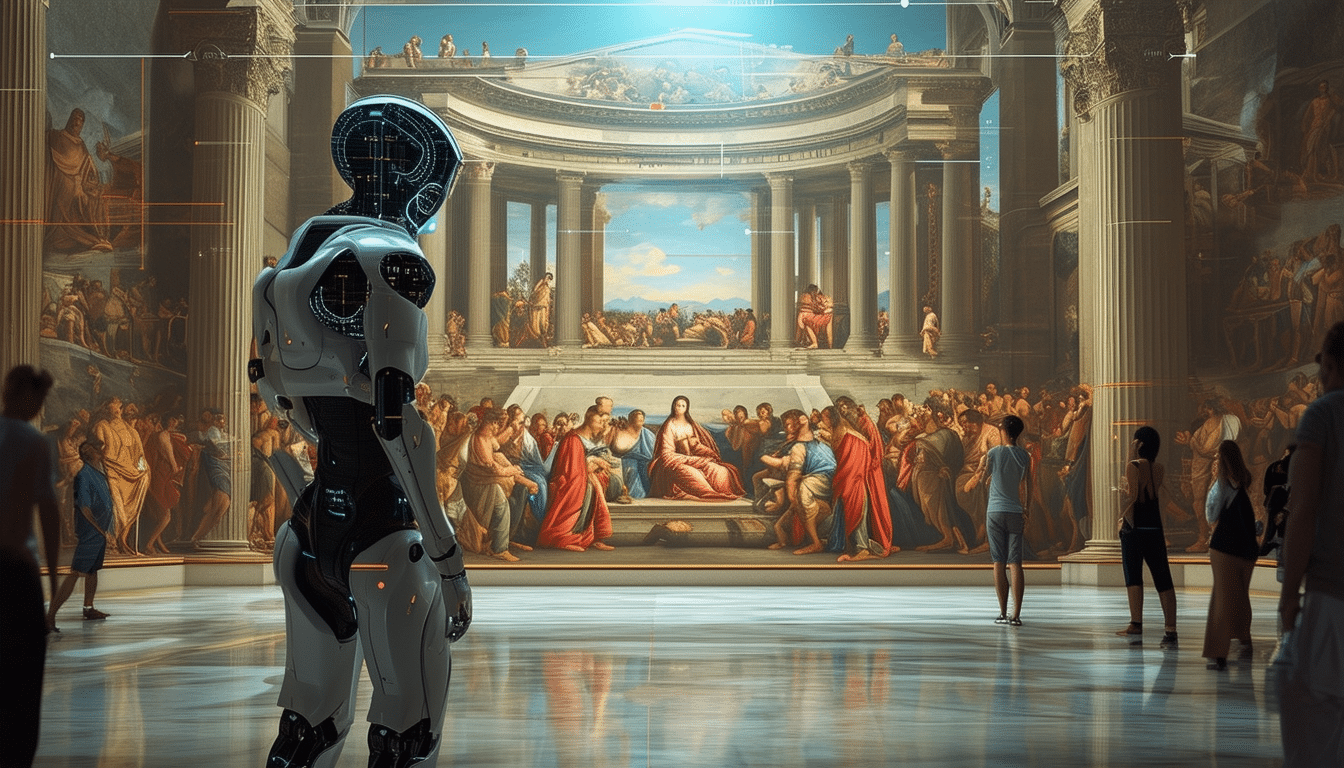
In the field of art, the integration of artificial intelligence marks a decisive turning point. Recently, a team of researchers used this cutting-edge technology to analyze Raphael’s « Madonna della Rosa », revealing secrets that have remained buried for centuries. The AI notably highlighted an unexpected detail: the face of Saint Joseph, previously attributed to the Italian master, could have been painted by another hand. Thanks to the alliance between advanced analysis algorithms and human expertise, this new chapter in the history of art promises to revolutionize our understanding of masterpieces.
In a recent study, artificial intelligence was used to analyze the Madonna della Rosa, a famous work by Raphael. Through an innovative technical approach, it has made it possible to reveal unsuspected secrets, particularly regarding the authenticity of the face of Saint Joseph. This discovery reignites the centuries-old debate over the authenticity of certain parts of the painting and opens the way to new methods of analysis in the field of art history.
Innovative analysis thanks to artificial intelligence
In December 2023, a team of British and American researchers set out to examine the Madonna della Rosa of Raphael using theartificial intelligence. They developed a custom algorithm based on the artist’s authenticated works. This modern technology has been crucial in uncovering long-hidden details, disputing the origin of parts of the masterpiece.
The tools used: ResNet50 and SVM
The analysis is based on two artificial intelligence techniques. First, a pre-trained architecture named ResNet50, developed by Microsoft, which was essential for identifying the specific characteristics of the work. Second, the use of Support Vector Machines (SVM), a traditional machine learning method, was able to categorize the array elements.
Discovery of an intriguing face
During the analysis, the AI revealed a surprising anomaly. While the main faces of the painting, such as those of the Virgin Mary and the Child Jesus, have been confirmed to be by Raphael’s hand, the face of Saint Joseph does not have the same stylistic characteristics. This observation rekindles a historical debate on the authenticity of this part of the work, a subject of controversy since the 19th century.e century.
Confirmation of old suspicions
For decades, art historians have suspected that certain details of the Madonna della Rosa might not be attributed to Raphael himself. The face of Saint Joseph has always been a point of contention, particularly because of its execution considered inferior to that of the other faces. The AI, with an accuracy of 98%, corroborates these doubts by proposing a possible reattribution of this part of the work.
A collaboration between technology and human expertise
While AI’s technical expertise is valuable, it is no substitute for the keen eye of human experts. The authentication process relies on the interaction of several disciplines, ranging from chemical analysis of pigments to study the provenance of the work. Thus, AI is a complementary tool that assists art experts in their quest for truth.
Towards a revolution in artistic analysis
The integration of artificial intelligence into the study of works of art offers new perspectives to experts. By detecting microscopic details invisible to the naked eye, it enriches our approach and understanding of the world’s artistic heritage. This promising technology could solve puzzles that have never been solved before, transforming the way we look at the masterpieces we thought we knew.
