Researchers warn: AI can now imitate your personality
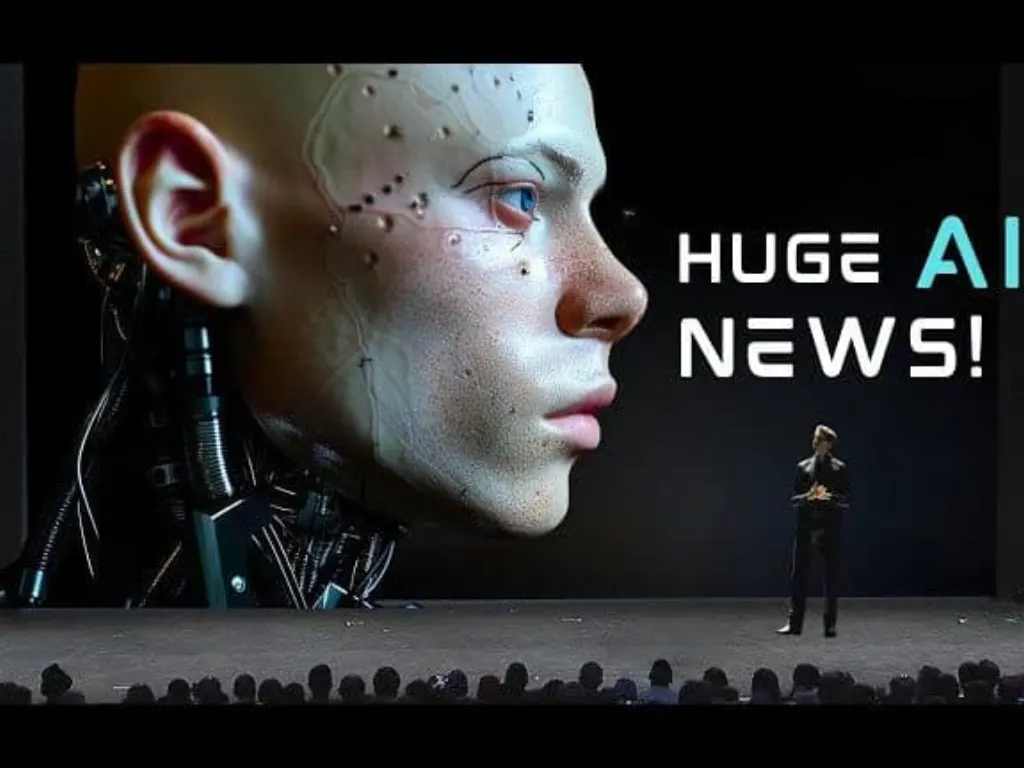
Researchers look at a discovery that could well revolutionize our relationship with artificial intelligence. Imagine a AI capable of imitating your personality to perfection thanks to carefully orchestrated interviews. This phenomenon, which approaches science fiction, raises countless ethical and societal questions. How willing would we be to leave a machine reproduce our thoughts, our emotions and even our decisions? The implications of this technological advance are dizzying and force us to reflect on the future of our personal identity in a world dominated by algorithms.
In an era where artificial intelligence (AI) is becoming increasingly sophisticated, researchers are sounding the alarm. Thanks to advanced techniques, AI can now reproduce your personality with astonishing precision, capturing your behaviors, opinions and even your tastes. This development raises unprecedented ethical and moral questions.
A disturbing technological development
Advances made by prestigious institutions like Stanford and Google DeepMind have enabled the creation of virtual clones capable of imitating real individuals in just a few hours of interview. Imagine a world where a simple verbal exchange lasting a few hours can give rise to a digital replica of yourself. This phenomenon goes well beyond simple imitation; it is a reflection of your digital soul.
A revolutionary interview method
To achieve this feat, the researchers opted for qualitative interviews. By discussing your memories, opinions, and experiences, AI can digest personal information in ways that go far beyond simple questionnaires. A single conversation can reveal subtleties of your personality that are sometimes harder to grasp in a formal setting.
Fascinatingly, these discussions don’t just focus on facts. They delve into the depths of your psyche, touching on topics like your childhood, your outlook on life, and even your political values. These intimate elements allow AI to create a digital avatar that truly represents you.
Disturbing implications
While such advances can revolutionize fields like research or entertainment, they inevitably raise concerns. What happens if your choices and decisions are made by an AI that acts as a digital double? The dangers of identity theft and opinion manipulation then become very real.
A cybercriminal could potentially generate a replica of yourself, making you say or do things without your knowledge. Imagine receiving messages or instructions from your own digital clone, creating confusion that jeopardizes your personal integrity and reputation. This is a scenario where AI becomes a double-edged sword.
Controversial societal applications
Researchers also aim to use these clones for unprecedented sociological studies. Indeed, these agents simulate complex human behaviors, which allows for research that is immoral or difficult to conduct with real people. This makes AI all the more attractive to institutions that are keen to collect accurate data without human ethics. A light on the future
The prospects offered by such technology are both exciting and frightening. Experts suggest that a future where AI could potentially make choices for you is possible. Imagine a world where AI agents manage your daily decisions, from planning your vacation to managing your finances. Automating certain decisions could greatly improve your quality of life, but at what cost?
The ethical issues become all the more crucial. The line between private and public life is blurring, and the implications for society are immense. As one researcher points out, the objective of these technologies must be to make our daily lives more accessible without sacrificing our individual identity.
Notez cet article
Read next
Imminent invasion: AI armies ready to invade networks and mimic your identity, researchers warn
A red alert is sounding in the field of . Researchers are announcing a growing threat: hordes of AI ready to invade…
 AI news
ChatGPT capable of replicating your personality: an expert raises the alarm
The world of artificial intelligence is in turmoil, and the emergence of technologies like ChatGPT raises troubling…
 AI news
Artificial Intelligence: Economists warn of the dangers of a financial bubble
In the world of , a new fear is emerging among economists: that this revolutionary technology could evolve into a…
 AI news
This AI reveals a surprising and daring side of its personality
In a world dominated by , some creations stand out not only for their effectiveness, but also for their personality…