Revolution in copy correction: artificial intelligence speeds up the process for around fifty teachers
Contents4
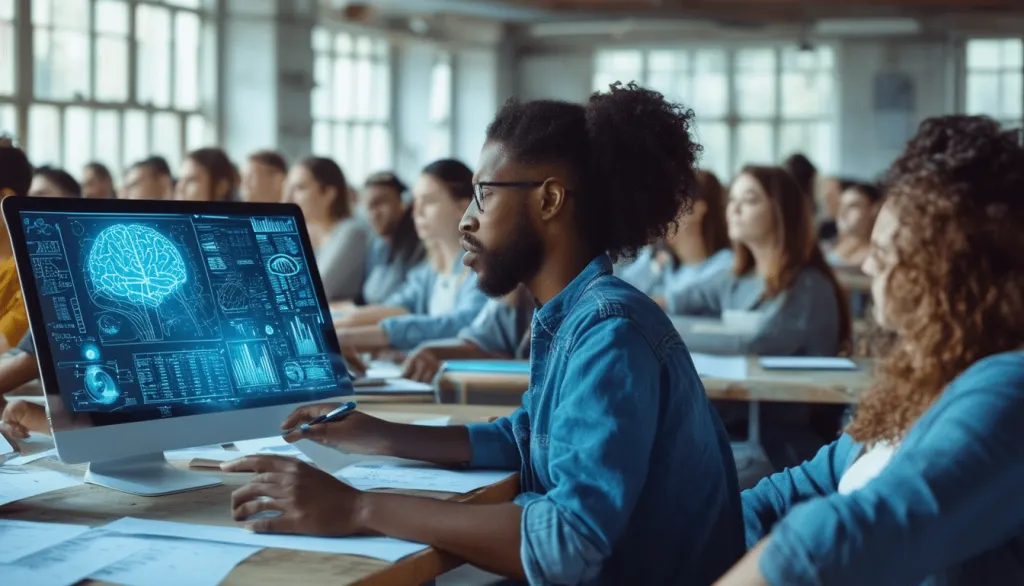
The introduction of technologiesartificial intelligence in the field of education is radically transforming the way exam papers are corrected. Around fifty teachers now benefit from solutions to improveefficiency, L’equity and the speed corrections. By relying on advanced systems, such as the Emilia project, this revolution raises questions while opening the door to adapted and customizable learning. Automated pre-correction and personalized feedback significantly reduce teachers’ workload, freeing up valuable time for other teaching activities.
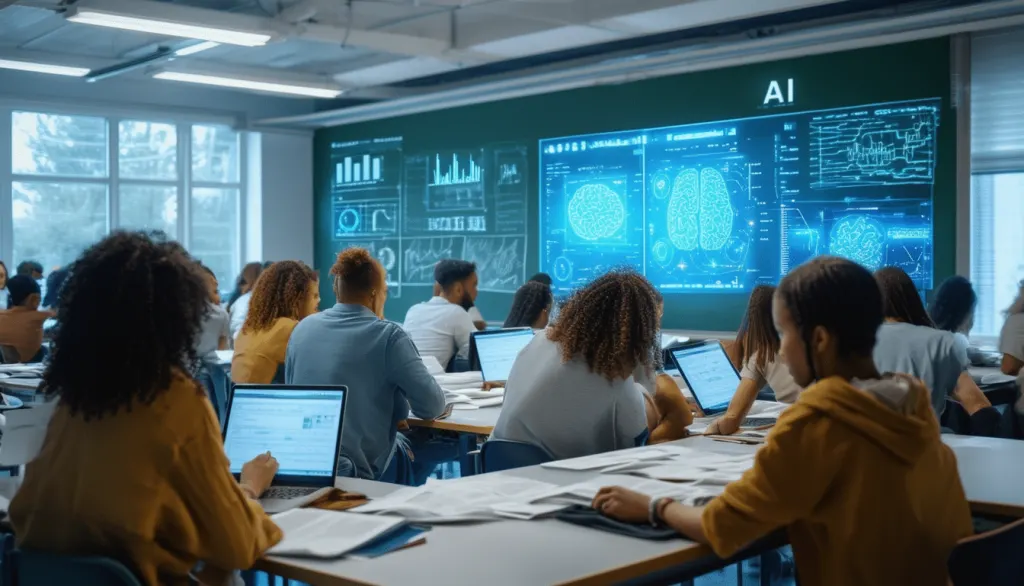
The integration of theartificial intelligence (IA) in the process of correcting copies represents a major transformation for around fifty teachers. Thanks to AI, correction becomes more efficient, faster and fair, while raising essential questions about its implementation. This text explores the role and impact of AI in education, the Emilia project designed to reduce the burden on teachers, and the many benefits and challenges associated with this technological innovation.
Improved efficiency and speed of remediation using AI
One of the major benefits of usingartificial intelligence in the correction of copies is theefficiency improved. Rather than spending hours manually correcting, teachers can now rely on automated systems for rapid initial correction. This frees up time for other essential educational activities.
Additionally, these systems can provide speed second to none in proofreading copies, often accomplishing in minutes what could take hours manually. This speed does not compromise the quality of the correction; rather, AI can be trained to detect and correct various errors with high accuracy.
Fairness and objectivity in correcting copies
Another notable benefit of using AI is the improvement ofequity and objectivity. AI-powered algorithms apply correction criteria consistently, eliminating potential biases that can creep into human correction. All students are judged according to the same standards, which reinforces the fairness of the assessment process.
In addition, AI makes it possible to provide personalized feedback to each student, identifying specific areas requiring improvement. This personalization of feedback can be extremely beneficial to students, helping them understand exactly where they went wrong and how they can improve.
The Emilia project: An AI to ease the workload of teachers
A concrete example of the use of artificial intelligence in education is the project Emilia, led by the College. This project aims to create an AI capable of correcting students’ written productions, thus providing valuable support to teachers. Emilia is designed to understand and analyze texts in depth, providing precise corrections and suggestions for improvement.
By reducing the correction task of teachers, the Emilia project allows them to devote more time to interactive educational activities and individualized support for students. This represents a significant step forward in how teachers allocate their time and effort.
Impacts and challenges of integrating AI into education
While AI offers many benefits, its integration into education is not without challenges. Among the questions raised are the reliability of automated corrections, the need for adequate teacher training to use these technologies, and the ethical implications related to privacy and use of student data.
Despite these challenges, the use of AI in educational processes continues to grow. Teachers and institutions must prepare for this technological revolution and understand its long-term implications. Ultimately, the goal is to create a more efficient, equitable and personalized learning environment, where artificial intelligence plays a crucial role.
Notez cet article
Read next
ChatGPT Images 2.0 : La correction tant attendue qui va révolutionner votre expérience !
Préparez vous à être ébloui par ChatGPT Images 2.0 , la mise à jour tant attendue du générateur d’images qui va…
 AI news
OpenAI unveils free ChatGPT for teachers: an innovative opportunity or a threat to our children?
is resulting in increasingly sophisticated tools, such as the brand new OpenAI ChatGPT, now available to teachers. This…
 AI news
Transform yourself into a fifty-year-old with Nano Banana: a mind-blowing experience to discover!
Have you always dreamed of knowing what you will look like in 50 years? Nano Banana offers you this incredible…
 AI news
In Belgium, the impact of artificial intelligence on the selection process of future doctors
In Belgium, the impact of using in the selection process for future physicians is a rapidly growing topic. AI offers…