Stanislas Dehaene: “Artificial intelligence will not soon reach the capabilities of our brain”
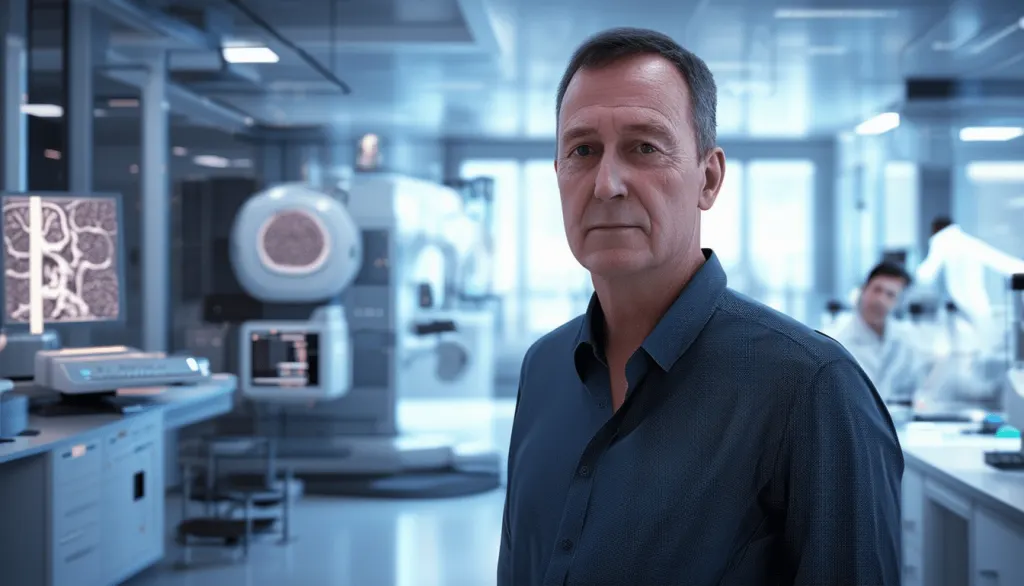
Stanislas Dehaene, eminent neuroscientist and professor at College of France, explores the vast capabilities of human brain in the face of advances in**artificial intelligence. While the algorithms modern systems can process immense volumes of data, Dehaene emphasizes that our brain, thanks to its extraordinary plasticity and its capacity tolearning**, manages to deduce relevant conclusions with much fewer resources. This contrast between human and machine highlights the wonders of our cognition, suggesting that AI still has a way to go before it can match the prodigious brain functions that evolution has given us.
Stanislas Dehaene, renowned neuroscientist, affirms that artificial intelligence, despite its impressive advances, remains far from matching the phenomenal capabilities of the human brain. He emphasizes that our brain is an incomparable learning machine, capable of developing conclusions with a much smaller amount of data than that required by artificial intelligence. This article explores Dehaene’s perspectives on how our brains outperform computer systems and how he envisions the future of interaction between these two entities.
An unparalleled human brain
According to Stanislas Dehaene, the human brain has unequaled complexity and efficiency in the field of learning. Capable of processing enormous amounts of information with low resource consumption, it outperforms current machines. This impressive ability is the result of millions of years of evolution and decades of personal education and experience. The brain is not just a simple computational machine, but a dynamic entity, continually influenced by social interactions and emotional experiences.
The need for less data
One of the most fascinating aspects of the human brain is its ability to draw meaningful conclusions with very little information. Dehaene highlights that, unlike AI which requires gigantic data sets to learn, our brains can formulate robust hypotheses with limited cues. This ability for rapid inference is essential for survival, as it allows for constant adaptation in a changing environment.
Complex brain communication
The model developed by Stanislas Dehaene in collaboration with Jean-Pierre Changeux highlights the complex communication between the different regions of the brain. This interaction relies on highly connected neural networks that allow the brain to function in an integrated manner. This complex neural architecture not only facilitates cognitive processes but also underlies the emotional and social characteristics that define humanity.
Stimulate creativity and learning
Dehaene posits that the human brain holds a notable superiority in creativity and learning compared to artificial intelligence systems. The brain’s innate curiosity and ability to concentrate promote the emergence of new ideas and the solving of complex problems. This cognitive plasticity, encouraged by appropriate education and various intellectual stimulations, is what characterizes our species and distinguishes us from machines.
The future of artificial intelligence
Despite advances in artificial intelligence, Stanislas Dehaene believes that there is still a long way to go before it matches human brain capacities. However, he recognizes the potential of AI technologies to enrich our understanding of the brain and to develop tools that improve our cognitive abilities. Ultimately, the evolution of AI and the human brain could represent a convergence where humanity is amplified by technological tools, but not replaced.
Notez cet article
Read next
Protecting minors: ChatGPT will soon be able to identify your children’s ages for better online safety
In a world where digital dangers constantly threaten the safety of young people, protecting minors is becoming an…
 AI news
AI experts say that AGI will remain out of reach until this major challenge is overcome
In the fascinating field of , a sobering realization is emerging: (AGI), the promise of a machine capable of…
 AI news
Shock in the EU: Will ChatGPT and social networks soon be limited to those aged 16 and over?
In a bold move, the European Union is considering imposing an age limit on access to social media and tools like…
 AI news
Coming soon: Artificial intelligence will revolutionize the search for parking spaces
In an urban world where finding a parking space is often a real headache, the use of is beginning to provide innovative…