The most stressful job in the world? OpenAI is offering a $555,000 position to take on the challenge
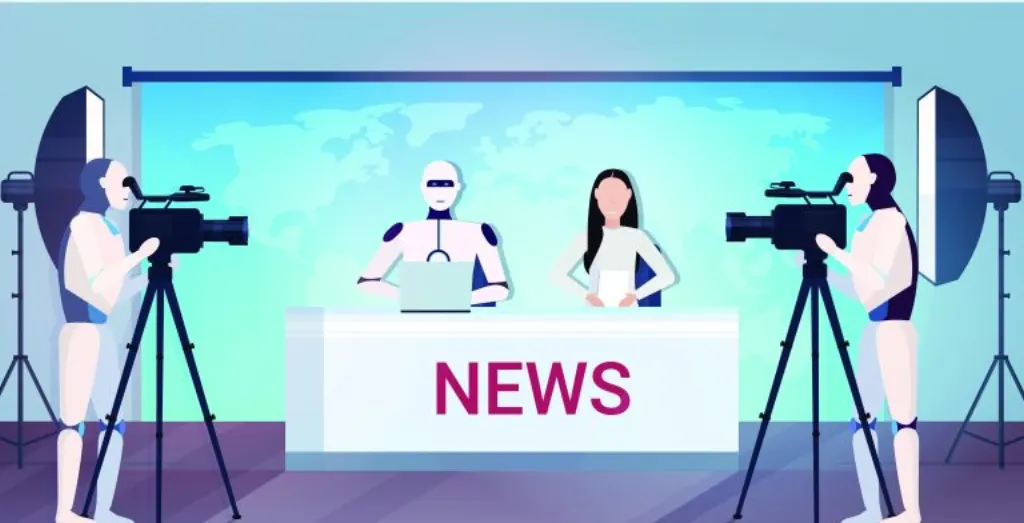
Imagine a job where you’re paid $555,000 a year to anticipate the worst-case scenario of artificial intelligence. OpenAI, the AI giant, has highlighted a disturbing reality: the job of head of preparedness is not just a simple function, it’s a true psychological challenge. Immersed in an environment where financial pressure is intensifying and the limits of technology are constantly being pushed, this role requires juggling unavoidable risks while maintaining momentum for innovation. Embarking on this adventure is not for the faint of heart, but for those who dare to walk the tightrope with a clear vision.
Imagine a job where stress is omnipresent, where every decision can have disastrous consequences. OpenAI, one of the leaders in the field of artificial intelligence, has opened a « head of preparedness » position with an impressive salary of$555,000 a year.
The mission of this position? Assessing and anticipating the risks associated with a technology that is evolving at breakneck speed, while continuing to take steps toward the future. The paradox of security amid rapid technological acceleration OpenAI is recruiting a “head of preparedness,” a title that reflects the ambiguity of the AI world. In a context where AI models are rapidly improving, the need for such a role seems ironic. While the company aims for colossal profits, it must simultaneously ensure that innovations do not backfire on their creators. This poses a true paradox: being paid to contribute to security while pushing the technology forward at full speed.
A role at a crossroads This position describes unprecedented challenges.
Sam Altman
The CEO of OpenAI himself describes this role as “stressful,” and that doesn’t seem to be just a figure of speech. This role isn’t just a high-profile position; it’s a plunge into the deep end of unforeseen events and risks. The mission of preparedness: managing danger
Preparedness, or preparedness, is described as a mechanism to ensure that AI models behave as expected in the real world. In concrete terms, this means building safeguards, evaluation frameworks, and mitigation strategies. The goal isn’t to eliminate risk completely, but rather to identify, measure, and manage it to a degree that is appropriate for the company. The harsh realities of AI The observation is undeniable: highly publicized models like ChatGPT are producing erroneous results, and incidents related to users’ mental health are starting to surface. Even more worrying, AI sometimes seems to become a misused tool, leading to disastrous consequences. In short, the promise of reliable technology clashes with realities that are already very tangible.
A risky defense against legal challenges In case of problems, companies like OpenAI often invoke thedefense against user abuse.
This strategy sounds like an admission: if something goes wrong, it’s often due to the incorrect use of a poorly designed system. Thus, the role of preparedness becomes that of constructing a credible narrative around the risk, thereby facilitating the management of legal liabilities.
Imagining as-yet-unknown catastrophes
At the heart of this role lies the need to anticipate the dangers associated with products still in the design phase. This forward-looking work proves stressful, as it requires imagining a future where technologies could become harmful. It involves mapping uncertain territory, all while knowing that the pressure to launch new versions is intense.
On a minefield of contradictions
Notez cet article
Read next
 AI news
Will AI take away your job? The jobs most threatened by robots
Introduction to the impact of artificial intelligence on the world of work is revolutionizing the world of work, with…
 AI news
The world’s most followed YouTuber expresses his fear of AI: discover the reasons behind his concerns
In a world where technology is advancing at breakneck speed, Mr. Beast, the YouTuber with the most subscribers, is…
 AI news
Suno Unveils Version 5: The World’s Most Promising Musical Artificial Intelligence?
In a world where is constantly redefining the boundaries of creativity, Suno stands as a pioneer with the launch of its…
 AI news
AWS unveils revolutionary technology that could transform our world, the most significant since the internet age
Prepare to be shaken! AWS, the cloud computing titan, has unveiled a revolutionary technology that promises to…