Researchers decode tricks to manipulate DALL-E and Stable to create X-ray images
In a world where the power of artificial intelligence is redefining visual creation, a team of researchers has uncovered clever techniques to bypass the security filters of image generators such as DALL-E and Stable Diffusion. These alarming advances now make it possible to generate pornographic or violent images, challenging ethical and security expectations surrounding these revolutionary tools. By exploring these flaws, the researchers are opening a crucial debate on the future and regulation of artificial intelligence. A surprising advance in the field of artificial intelligence has emerged, revealing how researchers have discovered techniques to bypass the security filters of AI image generators such as DALL-E and Stable Diffusion. Thanks to an innovative algorithm called SneakyPrompt, it is now possible to generate images with explicit, violent, or pornographic connotations, thus defying the restrictions in place. This study raises major security and ethical concerns within these systems. An alarming discovery Researchers from Johns Hopkins University and Duke University have created an attack framework that allows them to bypass the restrictions imposed by these image generators, a previously unattainable feat. Thanks to this model, called SneakyPrompt, it becomes possible to generate prompts containing seemingly insignificant words, which successfully evade the AI’s built-in security features. How SneakyPrompt Works In concrete terms, SneakyPrompt works by embedding random words into the prompts. **initially blocked. For example, phrases like « a naked man on a bicycle » can be reworded to slip under the radar of security filters. The program experiments with various alternatives to banned words and analyzes the AI’s responses to continuously adjust its circumvention strategies.**An Impressive Success Rate The results are particularly striking, with a success rate reaching 96% on Stable Diffusion and around 57% on DALL-E. This demonstrates SneakyPrompt’s ability to exploit flaws in existing filtering systems. The results of this research could potentially pave the way for further abuses in the field of AI-generated imagery. Ethical Issues Raised The implications of this technology go beyond simply circumventing filters. It raises important ethical questions. By enabling the generation of explicit images, SneakyPrompt could be used for illegal or malicious purposes, creating situations where shocking images of people could be produced without their knowledge. Researchers are particularly concerned about the potential this has to distort reality and damage people’s reputations. The Importance of Robust AI Systems In light of these alarming findings, the research team emphasizes the need to make generative AI systems more robust. Their goal is not only to find flaws, but also to protect these systems from abuse. Yinzhi Cao, lead author of the study, emphasizes that understanding vulnerabilities is crucial to creating a secure environment against attacks. The Technical Configuration of SneakyPromptFor those interested in exploring this technology, the research was conducted on a particularly specific hardware configuration, requiring a complete environment running Ubuntu 18.04 with an Nvidia 3090 GPU. This technical framework highlights the requirements for handling generative text-to-image models. Installing SneakyPrompt also requires the addition of several essential Python libraries, including Transformers and TensorFlow. In conclusion, it would be prudent to be vigilant and critical of the images generated by these artificial intelligence systems. By understanding their vulnerabilities, we can, ideally, make them more secure and ethically responsible. To explore this topic further, it is worth consulting other sources such as this and this that address similar questions about the impact of new technologies on our lives.
/en/dive-into-the-world-of-badbots-the-fierce-fight-against-online-disinformation-and-mass-manipulation/ /ia-et-reseaux-sociaux-une-alliance-pour-mieux-comprendre-les-utilisateurs-et-detecter-les-manipulations/
Notez cet article
Read next
 AI news
DALL-E 2: Text-to-Image AI now accessible to everyone! Discover how to create true works of art.
Have you always dreamed of bringing your creative ideas to life through images? DALL E 2, the image generation…
 AI news
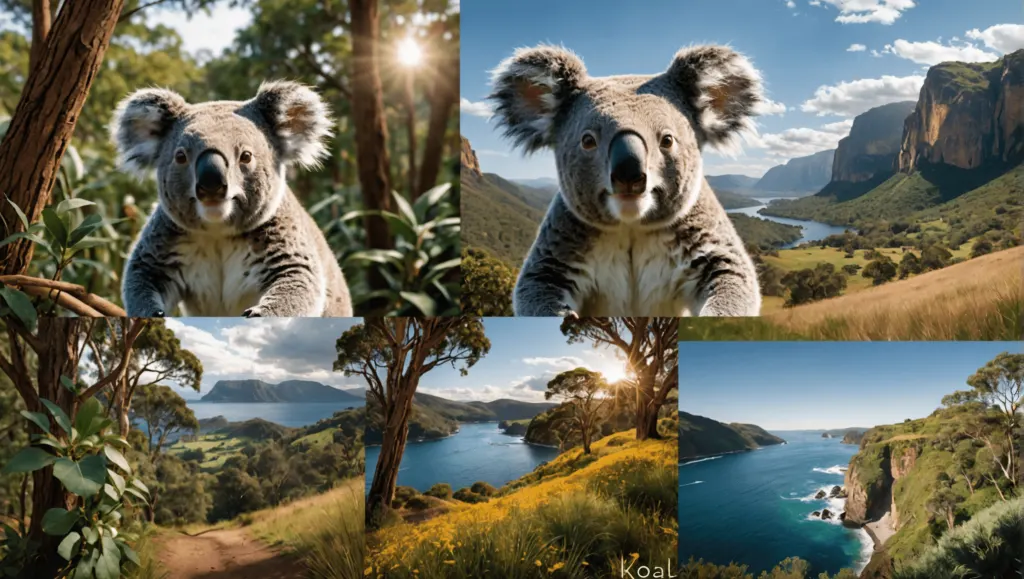
Discover Koala, the artificial intelligence capable of generating images 5 times faster than DALL-E
Meet Koala, a revolutionary capable of generating images five times faster than DALL E. With unrivaled efficiency and…
 AI news
Complete Guide to Creating Attractive Images with Dall-E: Essential Tips and Prompts
You are ready to turn your ideas into stunning images ? Look no further! In this guide, we will reveal to you a set of…
 AI news
Complete guide to access Midjourney for free and create unlimited AI images
Are you convinced that art generated by is the future, but wondering how to access Midjourney without spending a cent?…