Sensational video reveals how artificial intelligence imagines the construction of the Egyptian pyramids
Contents5
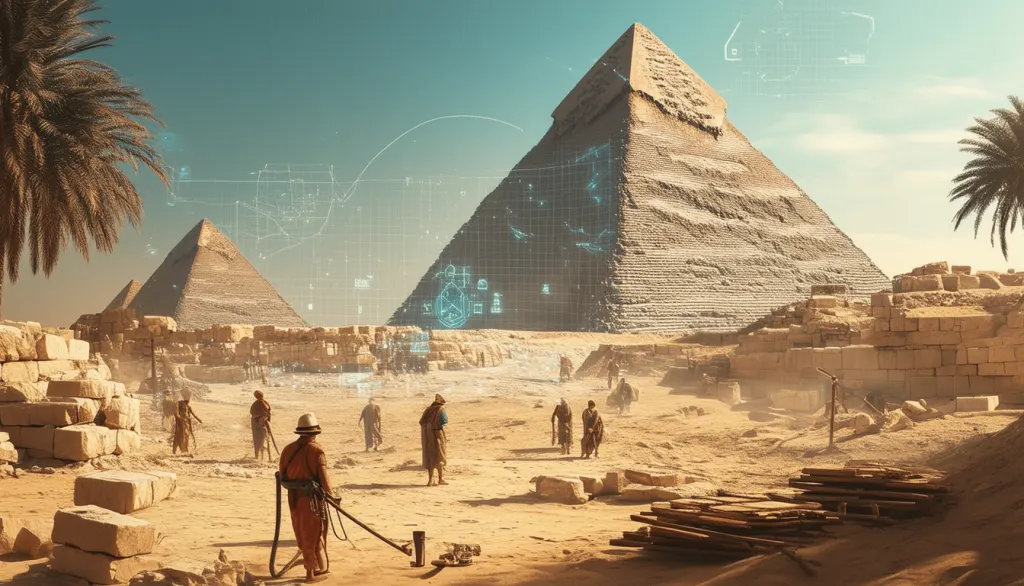
A video recently released on social media presents a spectacular vision of the construction of the pyramids of Egypt, generated by a artificial intelligence. By incorporating fictional elements such as giants lifting huge blocks of stone and statues mysteriously coming to life, this sequence illustrates the advanced capabilities technologies**generative artificial intelligence**. Although playful, it raises questions about the blurring of the boundary between the real and the virtual, inviting us to reconsider our perception of digital content.
Recently, a video generated by artificial intelligence attracted the attention of Internet users by claiming to show the construction of pyramids of Egypt. Accumulating millions of views, this footage highlights impressive beings carrying out this colossal task, raising questions about the capacity of modern technologies to blur the line between reality and fiction. This article explores the fascinating and disturbing aspects of this intriguing clip.
The emergence of video and its spread on networks
Over the past few days, a viral clip has captured interest on platforms like X (Twitter), YouTube and TikTok. This video appears to feature archival footage of the construction of the pyramids, offering a never-before-seen perspective of theAncient Egypt. This brief clip managed to amass tens of millions of views, sparking both amusement and fascination among viewers. Intriguing scenes of colossal men and blocks of stone magically floating down the Nile have been the subject of lively debate.
The surprising elements of the sequence
In this video, artificial intelligence gave shape to a surprising version of ancient times where giants, reaching more than three meters in height, were busy building the pyramids. These images also show statues that appear to come to life, offering an almost mystical view of this historical period. Although this unlikely scenario was met with humor, the technical skill behind the creation of these images remains impressive.
A challenge for the recognition of generated content
This experience highlights the notable advances in**generative artificial intelligence** in creating misleading images. Currently, no tool can reliably detect content produced by AI, which accentuates the need for viewers to adopt a critical stance towards digital content. Experts recommend a vigilant approach to videos on social media, so as not to take visually appealing but fictitious information at face value.
Historical precedents and collective imagination
This is not the first time that the pyramids of Egypt have been the focus of AI-generated images. In the past, similar tools have captured the collective imagination by simulating the construction of these ancient monuments. One notable example is an image that in July claimed to have been taken in 2549 BC, long after the supposed time the pyramids were built. Popular anecdotes about these architectural feats continue to fuel the fantasy by projecting the most varied visuals.
Conclusion: The use of AI in historical interpretation
This phenomenon highlights the need for discernment and scientific rigor when faced with works created by artificial intelligence, especially when they deal with historical reconstructions. The line between myth and reality is blurring in a world where technology holds the power to bring fascinating but fictional stories to life.
Notez cet article
Read next
 AI news
Squid Game: Fans unhappy with the ending, an AI imagines a new conclusion
The captivating world of Squid Game left thousands of fans wanting more after a disappointing ending. Rather than…
 AI news
OpenAI imagines a future where artificial intelligence could replace your jobs with ChatGPT
OpenAI is not just a simple company, it is the laboratory of ideas that could redefine our relationship to work.…
 AI news
The rise of artificial intelligence in the real estate sector: a new future under construction
In the midst of digital transformation, the real estate sector is experiencing remarkable development thanks to the…
The inventor of AI reveals: who will triumph and who will perish in the artificial intelligence revolution?
The inventor of AI, , enters the heart of a heated debate that is shaking the foundations of the modern world. On one…