The end of lines judges at Roland-Garros: AI is taking over, threat or revolution?
Contents7
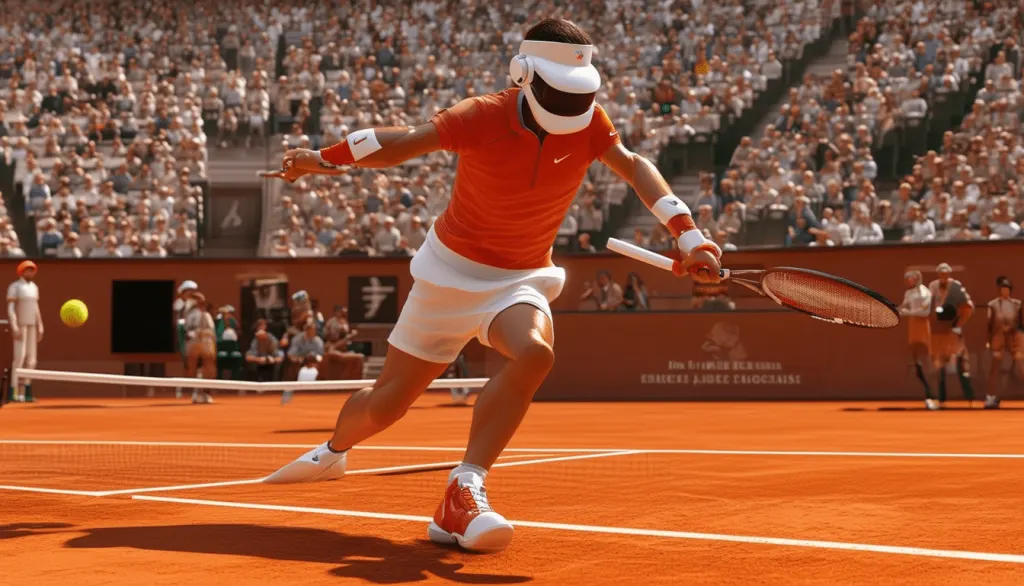
The end of lines judges at Roland-Garros marks a major turning point in the history of tennis. Artificial intelligence is now taking over, arousing both fascination and fear. But does this technological revolution herald a threat to the human aspect of sport or, on the contrary, an unavoidable development?
A Technological Revolution Approaching
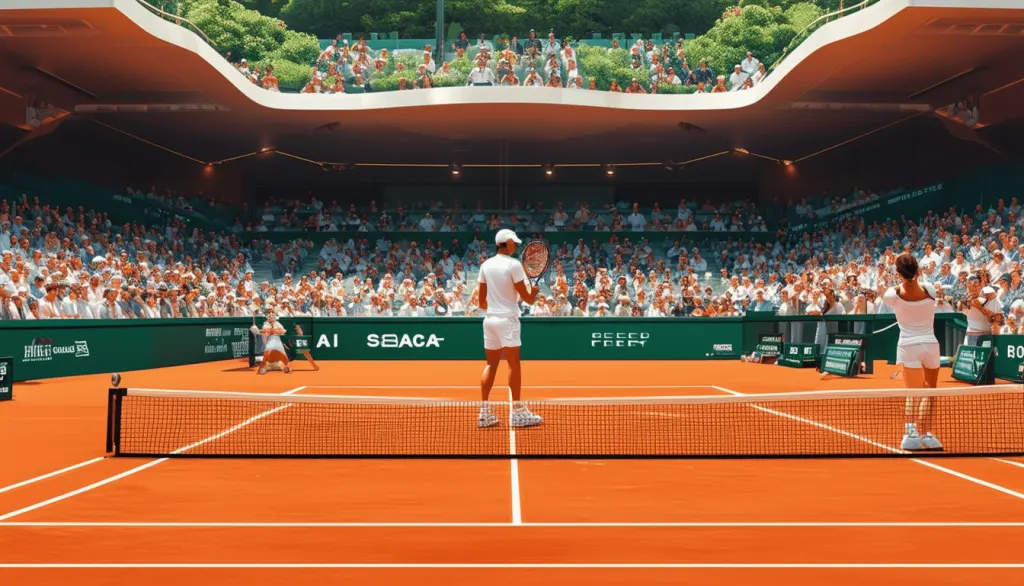
THE French internationals at Roland-Garros will be profoundly transformed by 2025. In fact, the 330 volunteer lines judges of the French Tennis Federation (FFT) may well no longer set foot on clay. This imminent transformation is due to the introduction of the electronic device Electronic Line Calling Live (ELCL), powered by AI. This cutting-edge system, beloved by some players, promises unprecedented precision.
The Threatened Tradition
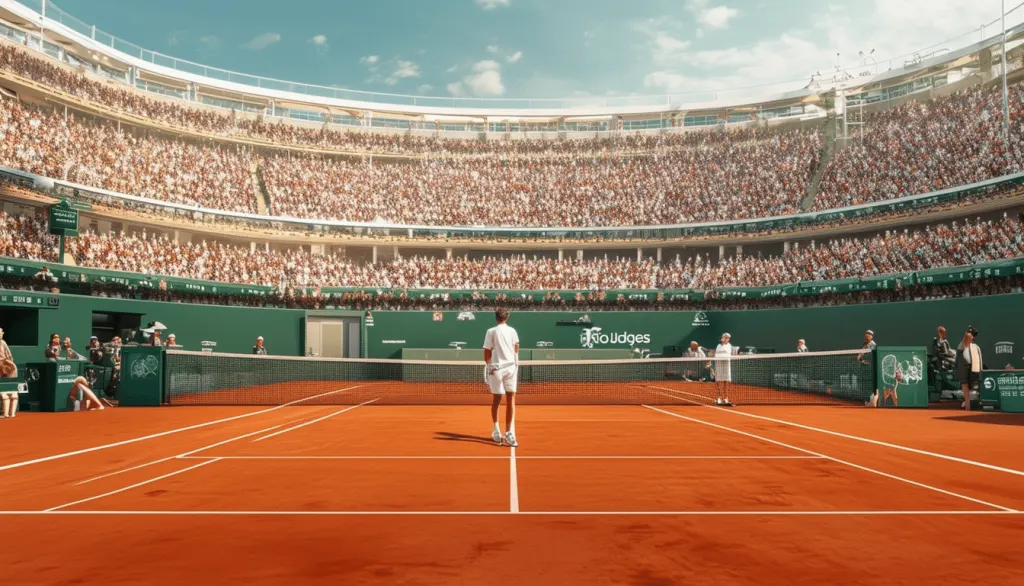
The impact of this transition is particularly felt at Roland-Garros, a place strongly attached to the history and traditions of tennis. Aymeric Labaste, director of international development at Roland-Garros, expresses his concerns about this change: “The day this happens, it will inevitably cause a pang in the heart.” For the arbitration sector in France, this technological development presents major challenges.
History and Context
The idea of replacing linesmen with electronic systems is not new. THE Hawk-Eye, used in various sports, offers 99% accuracy thanks to its 18 cameras and advanced algorithm. Already in 2017, the ELCL system has proven itself during Next Gen ATP Finals in Milan. Since then, the US Open has also adopted this technology after the 2020 edition.
ELCL Technology and Operation
The ELCL system is based on a sophisticated infrastructure. Here are some key components:
- 18 cameras constantly scan the lines of play.
- 6 dedicated cameras monitor foot faults.
- A 3D video is generated to trace the trajectory of the ball, even during high-speed serves (up to 240 km/h).
- Recorded voices announce mistakes with a metallic tone.
Undeniable advantages
For the ATP and many players, the adoption of AI in refereeing is a natural progression. Andrea Gaudenzi, president of the ATP, believes that “tennis deserves the most precise form of refereeing”. THE ELCL eliminates human errors and provides uniformity of rules internationally. Players like Djokovic support the technology, saying there is no longer any reason to retain linesmen.
An Uncertain Future for Line Judges
The linesmen, aged 18 to 65 and from various professional backgrounds, constitute a pillar of the French internationals. This role is often a gateway to becoming a chair umpire. The elimination of this position could threaten this arbitrary pyramid structure. At Roland Garros, no official decision has yet been made regarding the adoption of the ELCL, but discussions are underway to standardize the rules with other Grand Slam tournaments.
Towards an Inevitable Change?
So, will spectators still have the opportunity to hear the lines judges’ screams next year? The question remains open and will depend on future decisions by the FFT and other tennis authorities. What is certain is that the introduction of AI into refereeing represents a major step for the sport, challenging decades of tradition and heritage.
Notez cet article
Read next
 AI news
Abraham Sallah and artificial intelligence: a revolution for tennis at Roland-Garros
Abraham Sallah, founder of Tennis AI, is revolutionizing tennis learning with advanced technologies. Through his app,…
 AI news
Attention high school students: the threat of deepfakes of a sexual nature is insidiously taking hold in educational establishments!
There threat of the deepfakes of a sexual nature interferes in educational establishments with emergency alarming. This…
 AI news
Artificial intelligence and image recognition: revolution or threat for creators?
is revolutionizing the world of images with its ability to generate and recognize visuals. AI art generators and…
 AI news
In Guéret, compromising AI-generated images target elected officials: the mayor is taking legal action.
In Guéret, the municipal election campaign has taken an unexpected and troubling turn, as compromising images generated…